CBS Joins the Billionaires’ Castration Chorus
Another Venerable Media Institution Falls to Trump
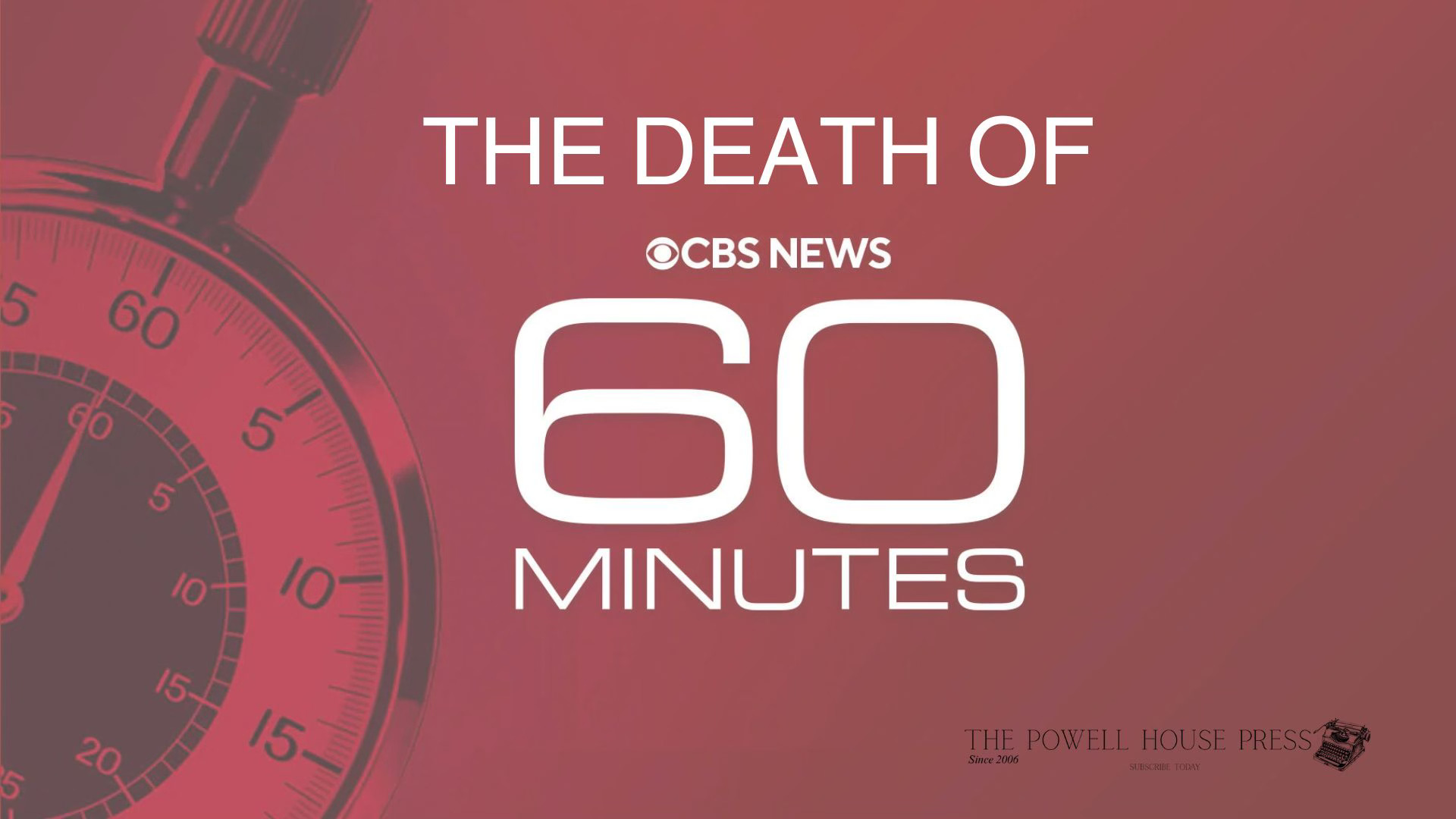
Three hours before airtime Sunday, CBS pulled a fully vetted 60 Minutes investigation into Trump’s deportation of Venezuelan men to a Salvadoran torture prison. If you’re experiencing déjà vu, you should be. This is the third act in American media’s most humiliating trilogy—and the most nakedly transactional yet.
Act One was Bezos in October, blocking The Washington Post‘s Harris endorsement eleven days before the election. Two hundred thousand subscribers fled. Three editorial board members quit. His Blue Origin executives met with Trump the same day he killed the endorsement. Bezos eventually wrote a craven op-ed about avoiding “perception of bias” while his government contracts hung in the balance.
Act Two was Patrick Soon-Shiong at the LA Times, vetoing his editorial board’s Harris endorsement. Editorials editor Mariel Garza resigned: “In dangerous times, honest people need to stand up.” Pulitzer winner Robert Greene followed. Soon-Shiong’s explanation involved wanting a “factual analysis” of both candidates, though his daughter’s vociferous Gaza activism may have been the real driver.
Now comes Act Three, starring the Ellisons—and this one’s got everything: a $16 million payoff to Trump, FCC pressure, promises to eliminate DEI, a conservative ombudsman, and Bari Weiss as the hatchet woman willing to kill journalism’s crown jewel for access to power.
The Ellison Arrangement
Here’s what David Ellison—Mission: Impossible producer and son of Oracle billionaire Larry Ellison—had to do to get his $8 billion Paramount acquisition approved by Trump’s FCC:
Pay Trump $16 million to settle a frivolous lawsuit over 60 Minutes‘ Kamala Harris interview. Promise to eliminate all DEI programs. Install a conservative ombudsman to monitor CBS News for “bias.” Agree to air $20 million in Trump-aligned public service announcements. Cancel Stephen Colbert’s Late Show (which Trump praised). And hire Bari Weiss—the Free Press founder with zero television experience—to run CBS News.
Oh, and Larry Ellison? He’s one of Trump’s richest backers and is bankrolling his son’s media empire expansion. The Ellisons have been described as Trump “friends” and “supporters.” When David wanted FCC approval, he met with Chairman Brendan Carr to promise CBS would reflect “varied ideological perspectives”—regulatory code for “we’ll behave.”
The FCC approved the deal in July. By September, longtime 60 Minutes executive producer Bill Owens had resigned, citing CBS’s fading editorial independence. By October, Weiss was installed as editor-in-chief. By December, she was killing stories about Trump administration abuses.
The CECOT Story They Buried
What Weiss suppressed wasn’t some ambiguous policy critique. Sharyn Alfonsi’s investigation documented Trump’s March invocation of the 1798 Alien Enemies Act to deport over 280 people—mostly Venezuelans—to CECOT, El Salvador’s mega-prison notorious for human rights abuses. The administration called them “rapists,” “savages,” “the worst of the worst.”
DHS data tells a different story: only 32 of 238 deportees had U.S. criminal convictions. Six were violent crimes. The rest were identified as gang members based on tattoos of crowns, sports logos, and the Air Jordan Jumpman. Deportees included a professional soccer player, a gay makeup artist fleeing persecution, a telephone technician. Many had pending asylum claims. They were lied to about their destination—told they were going to Venezuela, not a Salvadoran prison.
A federal judge ordered the planes turned around mid-flight. The administration refused—now the subject of criminal contempt proceedings. On Monday, another judge ruled the deportations violated due process. Multiple courts have called it unlawful. This is what CBS decided couldn’t air because the White House wouldn’t comment.
Alfonsi’s memo was devastating: “Government silence is a statement, not a VETO. If the administration’s refusal to participate becomes a valid reason to spike a story, we have effectively handed them a ‘kill switch.’” She added that CBS was “trading 50 years of ‘gold standard’ reputation for a single week of political quiet.”
She was fired from the assignment within hours.
Days before CBS killed the segment, Trump had been rage-posting that 60 Minutes was treating him “worse” under new ownership. “If they are friends, I’d hate to see my enemies!” he wrote Friday night—as drama unfolded behind CBS’s walls.
Meanwhile, Paramount is pursuing a hostile Warner Bros. Discovery takeover requiring Trump administration approval. The Wall Street Journal reported that David Ellison has promised Trump he’ll make “sweeping changes” to CNN if the deal goes through. His allies are privately telling Warner Bros. Discovery shareholders that Ellison is “the only buyer who would pass muster with Trump administration regulators.”
Weiss told staff Monday that the story didn’t “advance the ball” because The New York Times had covered CECOT. By that logic, 60 Minutes should never have done Watergate. She then suggested interviewing Stephen Miller and helpfully provided contact information. The message: get administration approval first.
What unites the Bezos, Soon-Shiong, and Ellison capitulations is their bad faith. All three involved owners with massive business interests vulnerable to government pressure. All three happened in election season or shortly after. All three were dressed up as high principle—”avoiding bias,” “letting readers decide,” “needing more reporting”—while being transparently about protecting bottom lines.
But the CBS version is the most brazen because it’s ongoing. Bezos and Soon-Shiong killed endorsements—a symbolic genre that arguably doesn’t matter much. David Ellison, through Weiss, is dismantling the investigative apparatus of America’s most storied news program. This isn’t about editorials. It’s about whether 60 Minutes can hold power accountable at all.
The leak of Alfonsi's segment online has only amplified the story Weiss tried to bury. Some CBS staffers are threatening to quit. But the damage is done. Trump now has what he's always wanted: a kill switch for inconvenient journalism at the network that gave America Edward R. Murrow, Walter Cronkite, and half a century of accountability journalism. It is no different from his arrangement with David Pecker, the publisher of the National Enquirer, who, along with Trump, engaged in 'catch and kill' schemes to bury stories.
The Washington Post adopted “Democracy Dies in Darkness” as its Trump-era motto. Then Bezos turned off the lights when Amazon’s government contracts mattered more. The LA Times railed against Trump’s threat to democracy for eight years, then went mute in the crucial moment. CBS News, built on holding power accountable regardless of consequences, just handed Trump the remote control.
FCC Commissioner Anna Gomez nailed it when the Paramount deal went through: “After months of cowardly capitulation to this Administration, Paramount finally got what it wanted. Unfortunately, it is the American public who will ultimately pay the price.”
She’s right. When the most important news organizations in America can be pressured into silence— well there’s a problem. A big one.
Coming January 2026:
Many years ago, when I was CEO at Capital Region Special Surgery, we had an otolaryngology practice among our holdings. It was late in the afternoon, when Dr. Awwad, one of the ENTs appeared in my doorway still wearing his scrubs. He stepped inside, and closed the door behind him with the deliberate care of a man bearing gossip too fantastic to share in the hallway.
He had something to tell me he said, but I had to keep it secret. Fine, I said.
Across town One of the new physicians at a rival ENT practice, he explained, had a dark family secret. This man—Dr. Robert Adelson—was about to become famous for all the wrong reasons. His mother was being investigated for hiring someone to kill her son-in-law.
He was practically vibrating with the sordid details, the way people do when other people’s catastrophes arrive gift-wrapped as entertainment. I had a different reaction. Or perhaps I should say a different understanding.
My father was accused and convicted of murder in Boston in the late 1940s, long before I was born. It was a strange happenstance—one of those family facts that sits in the background of a life like furniture you’ve stopped noticing. But it also means I know something most people don’t: that murder, when it enters a family’s story, never really leaves. It becomes part of the architecture. It shapes what comes after in ways both obvious and invisible.
So when he finished his breathless report about the Adelson family’s unraveling, I didn’t feel the voyeuristic thrill he was clearly experiencing. I felt the particular chill of recognition. I knew that whatever was coming for the Adelsons—the investigations, the trials, the headlines—would be only the beginning. The real sentence would be served by everyone who shared their name, for generations.
I had no idea, of course, just how operatic the Adelson saga would become.
Coming this January - Part One: “The Outsider’s Error”—On the particular hubris of a Canadian intellectual who thought a good argument could win against a family that had already decided he was the problem.
©2025 All Rights Reserved - Joshua Powell & The Powell House Press.
Contact: josh@thepowellhousepress.com


