
Nixon Did It in the Dark
Fifty-two years later, Trump runs the same revenge playbook in daylight. The institutions that removed Nixon are settling instead of fighting.

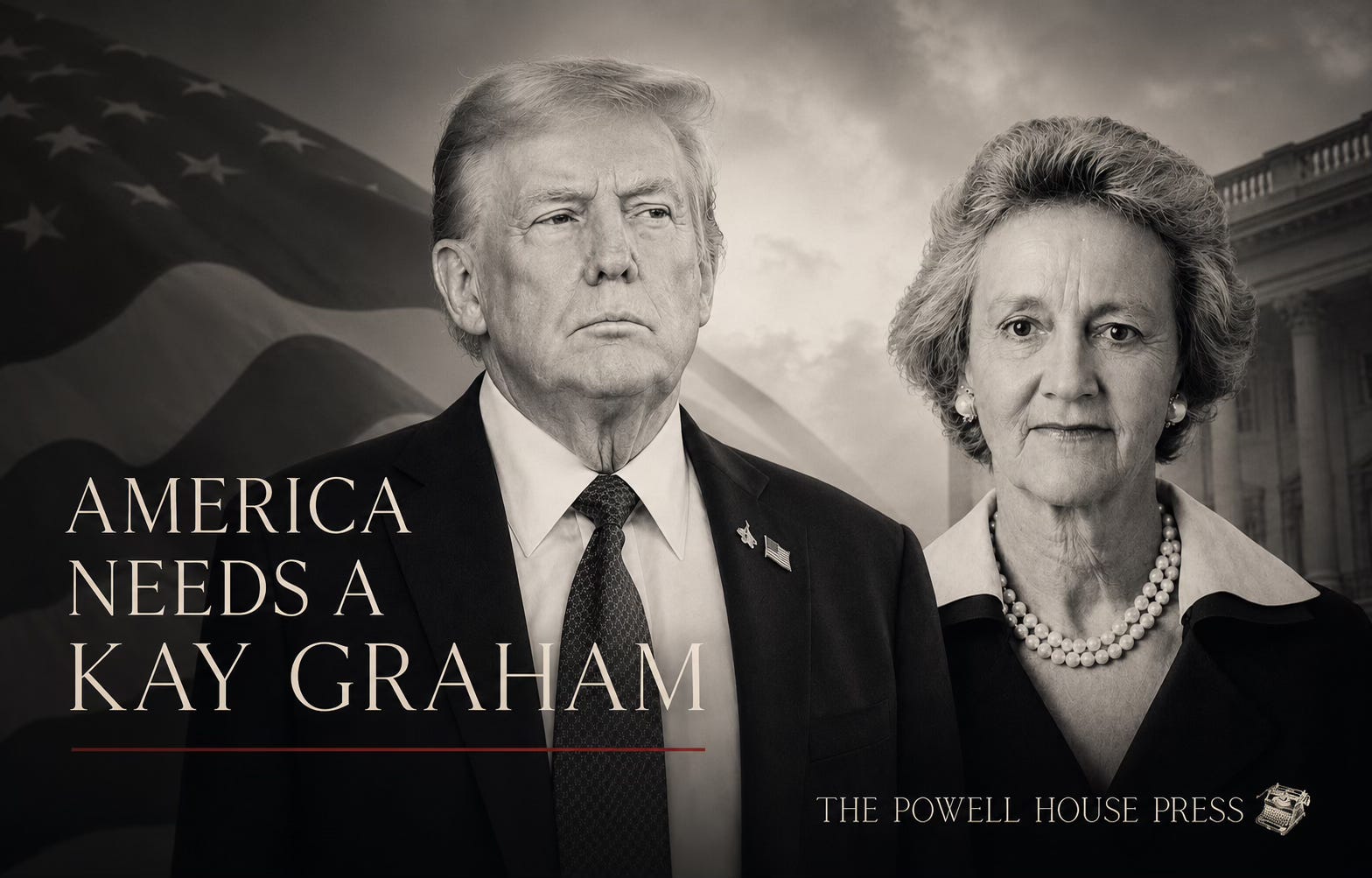
Last night I watched “Becoming Katharine Graham.” It’s worth a watch for a couple of reasons. One is that she was a remarkable woman with a great life story of achievement on a personal level. Another is understanding the role of the press in our nation. And circling back to the personal side of Graham’s story are her ethics and understanding around being a publisher. I read her autobiography years ago, Personal History. She is not a new figure in my life, but watching this last night was yet another lens to examine Trump and the Republican Party through. I’ve said it before and I will say it again: Nixon was the start of rot. Ford’s greatest mistake was pardoning Nixon. It gave a template for this party to achieve so much that has been so destructive, often through illegal channels, be it Iran-Contra, the Iraq War, or so many of Trump’s horrific grifts. But Graham and The Washington Post, unlike Fox News and NewsMax, did its job putting pressure on power, the way it is supposed to work.
When Richard Nixon took the oath for a second term on January 20, 1973, he had carried forty-nine states. He won the popular vote with over 60% of voters picking him. The Watergate break-in had already been reported by The Washington Post. Most papers did not run the story, and the public seemed not to care. In the documentary, Graham was reported to have repeatedly gone to Editor Ben Bradlee, asking him: if it was the story the paper claimed, why was it not getting traction? And it’s important to remember that at this point The Washington Post was riding a high after publishing the Pentagon Papers and winning in the courts. There was a real credibility issue for Graham with Watergate.
Watergate might never have been the spectacular downfall of a second-term president who was, at least when looking at the votes, popular (or, to many, just not as unpopular as McGovern), except Nixon was a petty man. A very vengeful man. Sound familiar?
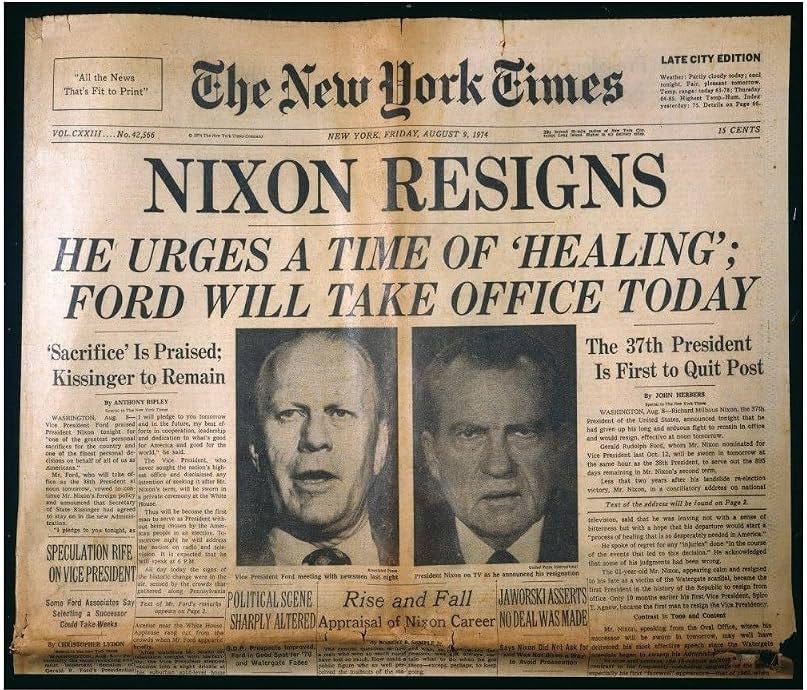
This is the part of the story that many gloss over or forget about Watergate. We remember Watergate as a noose that was always tightening. It was not. When Nixon began his second term, the cover-up was holding. The Senate had not yet convened its select committee. James McCord had not yet written his letter to Judge Sirica. John Dean had not yet flipped, Alexander Butterfield had not yet mentioned the taping system, and the phrase “Saturday Night Massacre” meant nothing to anyone. All of these names and terms were born out of Nixon’s paranoia and his long grudge list. It was an actual list. Charles Colson had assembled it. Dean had a copy. It listed journalists, donors, academics, actors, and one publisher in particular, Mrs. Graham. Her “allowing” The Washington Post to write about Watergate was a red line for Nixon. He was still sore she had bested him in court with the publication of the Pentagon Papers.
The Nixon administration went after The Washington Post Company where it was vulnerable. Not in the newsroom, but it’s profits. The Post itself was not a big moneymaker, nor did Nixon have any muscle to flex against a newspaper. He failed spectacularly against it during the leaking and publication of the Pentagon Papers. But he did have regulatory power over two valuable assets of the Post Company, which had only recently gone public: its television stations.
“Katie Graham’s gonna get her tit caught in a big fat wringer if that’s published. Good Christian, is it Carl?”
Nixon allies filed challenges against the broadcast licenses of two Florida television stations owned by the Post Company, causing the stock to fall by roughly fifty percent. The message was not subtle, nor it was not meant to be. It was a threat. On tape, Nixon mused that the Post had “damnable, damnable problems” coming, on account of those licenses needing renewal. His attorney general, John Mitchell, had already delivered the cruder version to Carl Bernstein (one of the reporters who was later played by Dustin Hoffman in “All the President’s Men) over the phone: “All that crap, you’re putting it in the paper? It’s all been denied. Katie Graham’s gonna get her tit caught in a big fat wringer if that’s published. Good Christian, is it Carl?”
It was not the botched, second-rate break-in at the Watergate that ousted Nixon from the Oval Office. It was his paranoia and exposed true character. Famously, the paranoia manifested in the installation of a recording system in the Oval Office, and it was these tapes that revealed Nixon’s true crimes. The scheming against enemies. The IRS audits. The plan to turn the machinery of the federal government into a weapon pointed at his enemies.
Fifty-two years later, Donald Trump took the same oath. On November 26, 2025, Reuters published “Trump’s campaign of retribution: At least 470 targets and counting,” by Peter Eisler, Ned Parker, Linda So, and Joseph Tanfani. They counted at least hundreds of people, organizations, and institutions targeted for retribution since Inauguration Day. The target list was real and Trump executed his revenge in the open, using the Justice Department, the FBI, Homeland Security, the IRS, the FCC, and whatever agency happens to hold leverage over a person or company in Trump’s crosshairs.
James Comey was indicted twice. John Bolton, who wrote a book Trump hated, pleaded guilty in 2026 to a records charge he called political from the start. Security clearances revoked from Biden, Clinton, Harris, Cheney, Kinzinger, and a national security lawyer named Mark Zaid, who represented the whistle blower that lead to Trump’s first impeachment. Law firms were pressured into eight-figure pro bono tribute to keep their federal business.
And then there is the press.
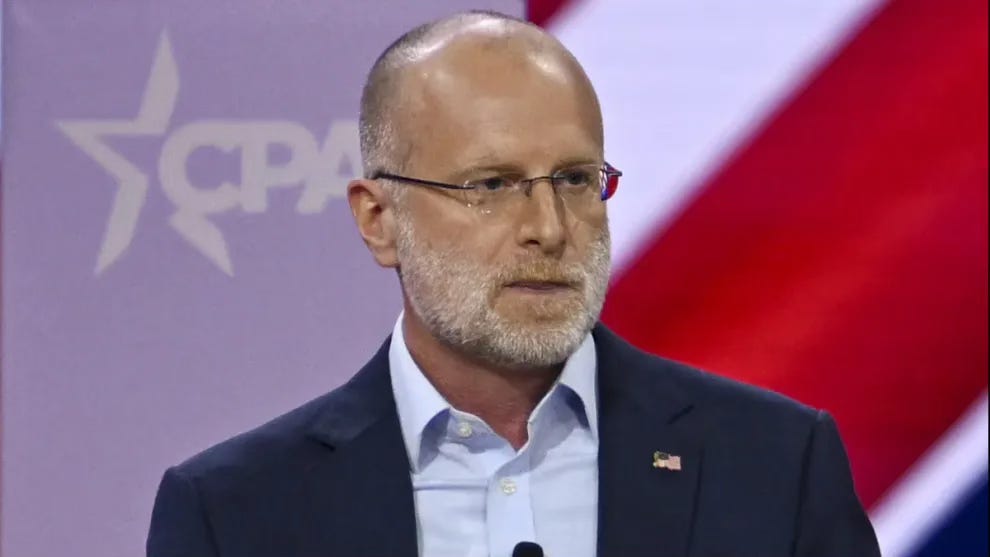
Graham’s exposure was two Florida television stations the Post Company owned. Nixon could not simply order the FCC to pull them, so his allies did, challenging the renewals. He needed the cat’s-paws. He needed the deniability. Trump needs neither. His own FCC chairman, Brendan Carr, is happy to do Trump’s bidding. Carr’s commission reopened a dead news-distortion probe into “60 Minutes,” investigated NPR and PBS, threatened broadcasters over their Iran war coverage, and is now moving to strip ABC of station licenses that were not even due for renewal until 2028. A bipartisan bench of former FCC officials has said publicly that the goal is to chill every broadcaster watching. Same weapon Nixon reached for, that exposed him and swept him out of office, Trump now openly employs without any consequences.
But Trump did not stop at threatening licenses, he also needed a payoff. There is the Paramount (who owns CBS) merger with Skydance that Trump has used in two very seedy, vengeful ways. He sued CBS for twenty billion dollars over the editing of a Kamala Harris interview on 60 Minutes. It was a lawsuit legal experts called meritless. Paramount, which needed FCC approval for its merger with Skydance, paid sixteen million to make it disappear. The merger cleared weeks later. But aside from the settlement Trump received, he also got a new, more friendly news department with Bari Weiss and the removal of TV’s most popular, and most critical of Trump, late-night talk show: The Late Show with Stephen Colbert. He has sued The New York Times for fifteen billion, The Wall Street Journal for ten, and the BBC for ten. The Associated Press was barred from the White House press pool for declining to call it the Gulf of America. Jimmy Kimmel was suspended, briefly, after the right kind of pressure. A CBS interview with a Democratic Senate candidate was pulled by the network’s own lawyers, pre-emptively, because they had learned what the FCC now does.
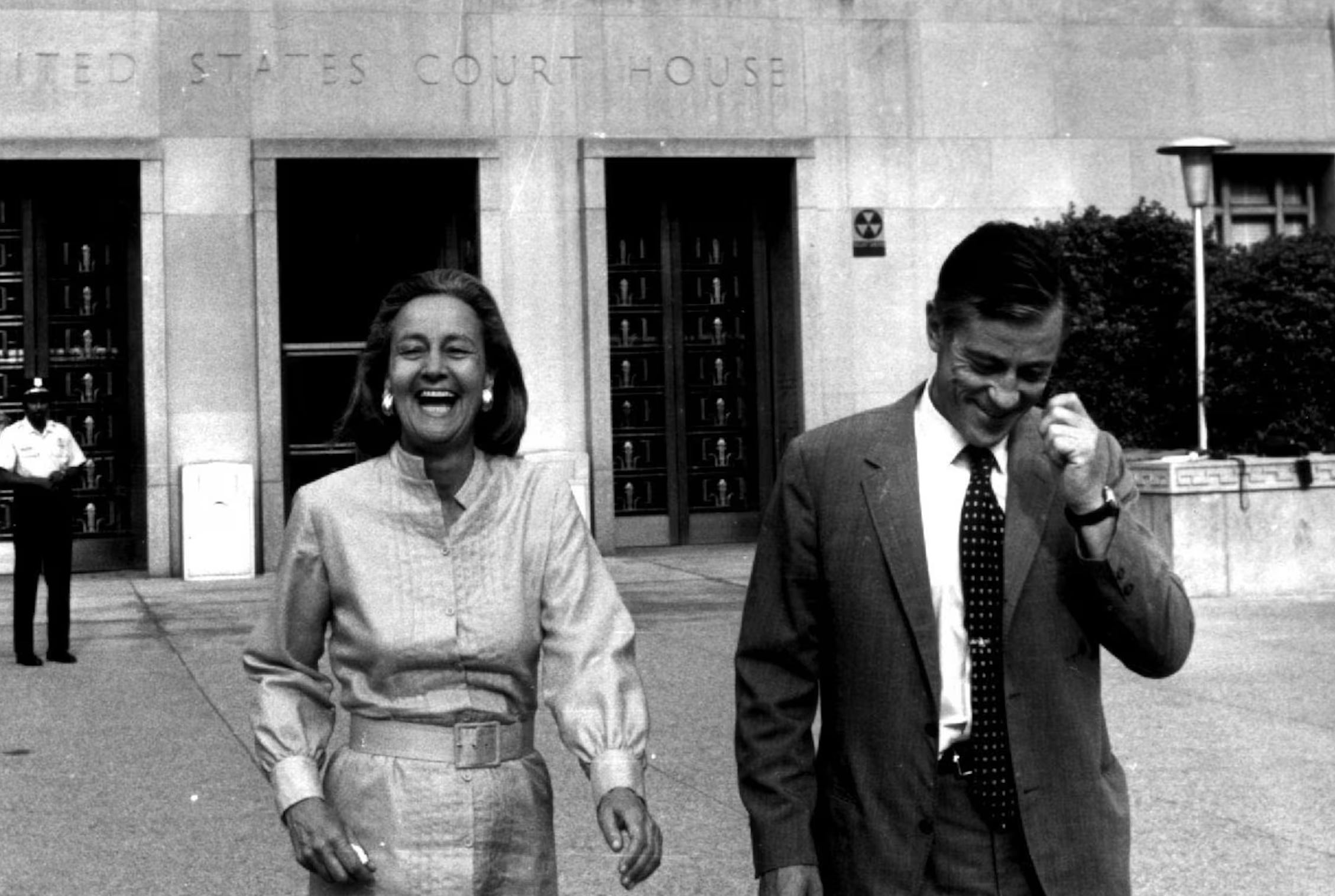
Nixon’s vengeance using the power of the government to settle his personal scores was no different than Trump’s today. When the Supreme Court made Nixon hand over the tapes from the Oval Office, a Republican delegation walked up to the White House and told him he was finished. The Post did not settle. Graham did not pay. The institutions had teeth, and when Nixon reached for the machinery, the machinery bit back and removed him inside two years.
But in today’s MAGA world institutions, unlike The Washington Post, cave. CBS paid a bogus settlement and silenced opposition. Law firms signed deals with Trump to preserve government contracts. Universities changed long-held policies on fairness and have changed curriculums.
Nixon needed a break-in, a cover-up, and tapes that showed what he was doing in the dark. Trump’s model has dispensed with the concealment entirely, on the theory (thus far correct) that he could shoot a man on Fifth Avenue and no one would care. Vengeance and corruption is a misdemeanor by comparison.
I woke up this morning missing people like Katharine Graham and wondered just how she got replaced by a Bari Weiss and how long America will last with these weak, sicophanitc fools failing at their jobs that has allowed Trump to exist as president.

©2026 All Rights Reserved | The Powell House Press | josh@thepowellhousepress.com