RFK Jr. Goes After SSRIs. The Wrong Drug. The Wrong Patients.
SSRIs are vital medications for older Americans. His use of Medicare to advance his non-evidenced based position on these medications will cause significant harm to an at-risk population.
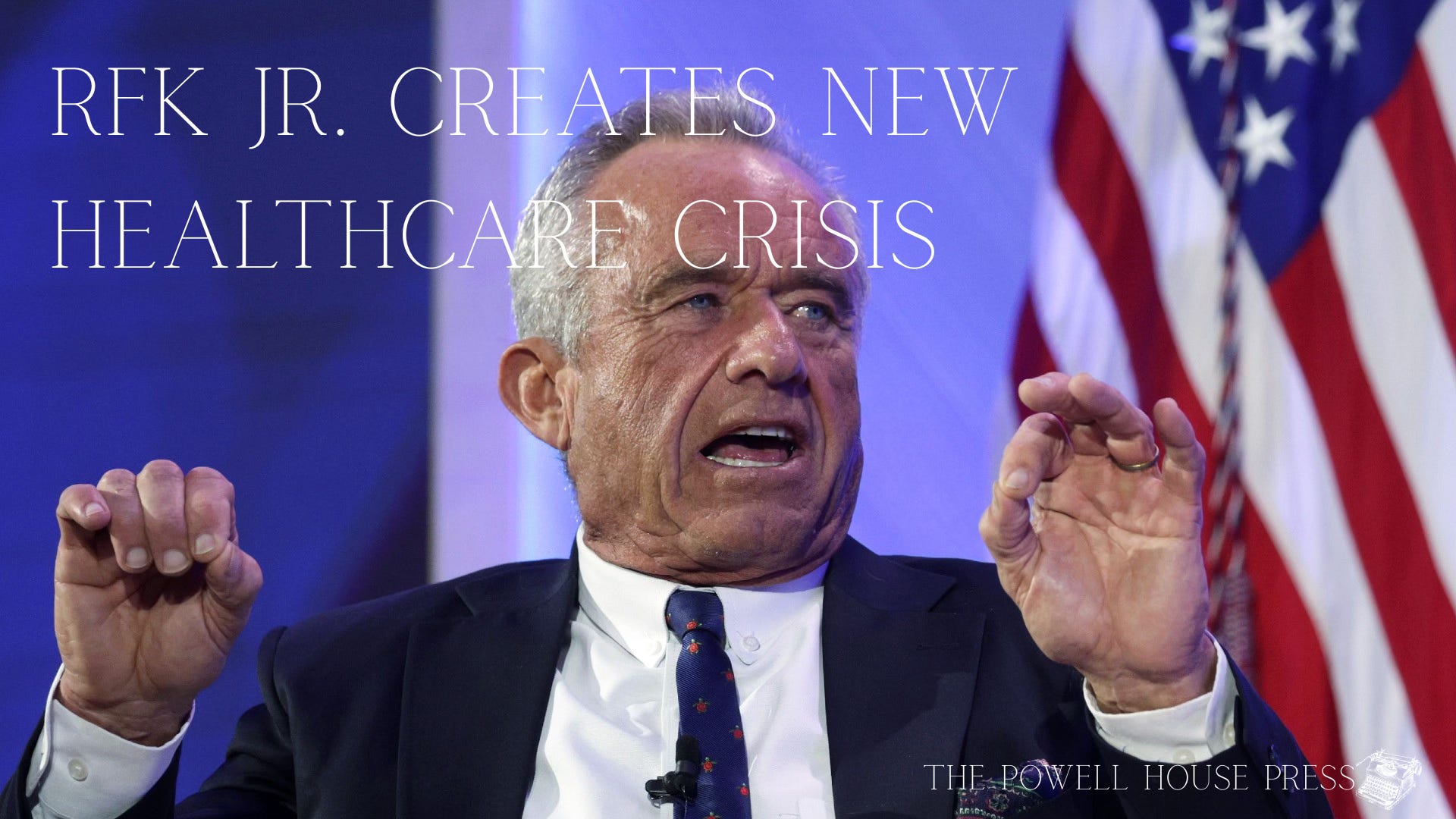
On Monday, Robert F. Kennedy Jr. announced a federal push to scale back SSRI prescribing. The plan includes new Medicare and Medicaid payments to clinicians who help patients taper, federal training modules, and “deprescribing” guidelines drafted by a yet-to-be-named expert panel. About 1 in 6 American adults take an SSRI. Kennedy has previously compared quitting SSRIs to quitting heroin. He has linked them, without evidence, to school shootings. He repeated the heroin comparison Monday.
The vehicle for the new push is Medicare and Medicaid. In other words, the oldest and the poorest Americans. The two populations most likely to need their psychiatric medications and least equipped to navigate a deprescribing bureaucracy designed by a man with no medical training.
I cannot speak to the Medicaid population. I can speak to older Americans and medication.
I worked as a project manager on the HEALing Communities Study. HCS, launched in 2019 by the National Institute on Drug Abuse and SAMHSA, was the largest addiction prevention and treatment implementation study ever conducted. NIH put more than $350 million into it. The study ran in 67 communities across Kentucky, Massachusetts, New York, and Ohio, the four states hit hardest by the opioid crisis. The goal was a 40 percent reduction in opioid overdose deaths in three years. Communities deployed evidence-based practices (medications for opioid use disorder, naloxone distribution, anti-stigma campaigns) tailored to local needs.
Evidence-based. Worth keeping that phrase in mind.
Inside that work I spent time on a population that does not show up in most opioid coverage: older Americans. The picture is grim and almost completely ignored.
Adults over 60 are the largest users of prescription opioids in the United States. Opioid use disorder in adults 65 and older more than tripled between 2013 and 2018. Opioid-related deaths among Americans 55 and older increased nearly 19-fold between 1999 and 2019. By 2017, roughly 0.8 percent of Medicare beneficiaries 65 and up carried an OUD diagnosis (up from 0.5 percent in 2015). The clinical profile of that group is brutal: 97 percent had pain conditions, 85 percent received opioid prescriptions, 45 percent were diagnosed with major depression, 45 percent with anxiety, and 38 percent received benzodiazepine prescriptions on top of everything else.
What we do for them once they are diagnosed is the second half of the disaster. Not much. Few addiction treatment programs employ geriatric specialists. Most are not designed for hearing loss, mobility limitations, or polypharmacy. Older adults disproportionately seek addiction help from primary care or the emergency department, settings where addiction is rarely the focus. Providers are often not trained to spot SUD in older patients, whose symptoms (memory changes, sleep disturbance, falls, withdrawal) get sorted into the dementia-or-aging-or-depression file and stay there. SAMHSA itself, in the federal treatment improvement protocol on this population, calls it an “invisible epidemic.”
The benzodiazepine layer compounds it. The American Geriatrics Society’s Beers Criteria has flagged benzodiazepines as inappropriate for older adults for years. They more than double the risk of falls and fractures. They are the second-most common medication class in pharmaceutical overdose deaths, and more than 75 percent of benzodiazepine-related deaths involve opioids. Suicide risk among people 65 and older on benzodiazepines is roughly four times higher than among those who are not. CMS reported in 2015 that 17.6 percent of Medicare Part D enrollees had been dispensed a benzodiazepine that year. None of this is news.
Late-life suicide is its own catastrophe. Men 75 and older have the highest suicide rate of any age group in the United States, 40.7 per 100,000 in 2023. Older adults make up about 17 percent of the population and roughly 22 percent of suicides. The lethality ratio is the part nobody talks about. For every completed suicide among young adults, there are roughly 200 attempts. Among older adults, the ratio is closer to 4 to 1. They plan more carefully, use more lethal means, and are less likely to be found in time.
This is the population an evidence-based federal health agency would obsess over. Geriatric SUD stays hidden because older patients do not trigger what younger patients trigger. They are not missing work. They are not pinging Child Protective Services. They are not getting pulled over. They are at home, on five medications, falling, drinking more than they used to, and grieving. The screening tools exist (CAGE-AID, MAST-G, ASSIST). The treatment evidence exists. The geriatric addiction specialists do not, in any meaningful number.
What this population needs is not what RFK Jr. is offering. It needs more geriatricians, more addiction medicine clinicians trained in geriatric pharmacology, more home-based and telehealth treatment, and Medicare reimbursement that makes any of that possible. It needs aggressive deprescribing of benzodiazepines, which would actually save lives. SSRIs, particularly citalopram, escitalopram, and sertraline, remain the recommended first-line pharmacologic treatment for late-life depression precisely because they are safer in older adults than the alternatives. The American Psychiatric Association objected to Kennedy’s “blanket overprescribing hypothesis.” They were polite about it.
Worth noting what Kennedy’s last big public health project has produced. Measles cases in 2025 hit 2,288, the most since 1991. As of late April 2026, 1,814 cases had already been reported, on pace to surpass last year’s total. Ninety-three percent of cases were in people who were unvaccinated or whose vaccination status was unknown. MMR coverage among U.S. kindergartners has slipped from 95.2 percent in 2019-2020 to 92.7 percent in 2023-2024. Whooping cough cases hit 43,321 in 2024 (the highest in more than a decade) and 28,783 in 2025, with at least 13 deaths. DTaP coverage at age 2 for children born in 2021 was 79 percent.
These are not abstractions. These are diseases that were nearly eliminated.
The same impulse runs through both projects. Pick a medication or a vaccine that has been studied for decades, treat the established evidence as a conspiracy, and repackage the skepticism as federal policy. The people on the receiving end (the unvaccinated child in a Texas measles ward, the 78-year-old whose Lexapro keeps her out of the ER) do not figure into the press conference.
Older Americans on SSRIs are not the problem. The lack of geriatric specialists is. The benzodiazepine prescriptions are. The hidden, untreated SUD is. None of those will be fixed by a deprescribing rule written by a man who thinks Zoloft is heroin.
I was one of the contributing authors of Community-Based Cluster-Randomized Trial to Reduce Opioid Overdose Deaths. Published June 16, 2024 in The New England Journal of Medicine.
Why Your Subscription Matters
Independent journalism answers to readers—not advertisers, corporations, or access-hungry editors. No story gets killed because it upsets a sponsor. No punch gets pulled because someone important made a phone call.
Your support makes possible sharp commentary, fearless satire, and reporting that follows the story wherever it leads. In an era of manufactured narratives and algorithmic blandness, that independence isn’t a luxury—it’s a necessity.
Subscribe to The Powell House Press. Or settle for content that tells you what someone else wants you to hear.
©2026 All Rights Reserved | The Powell House Press | josh@thepowellhousepress.com