The Shepherd and the Storm Troopers
The ICE Director Who Runs the Office Where Renee Good Was Killed Preaches at a Church With Deep Roots in White Supremacy
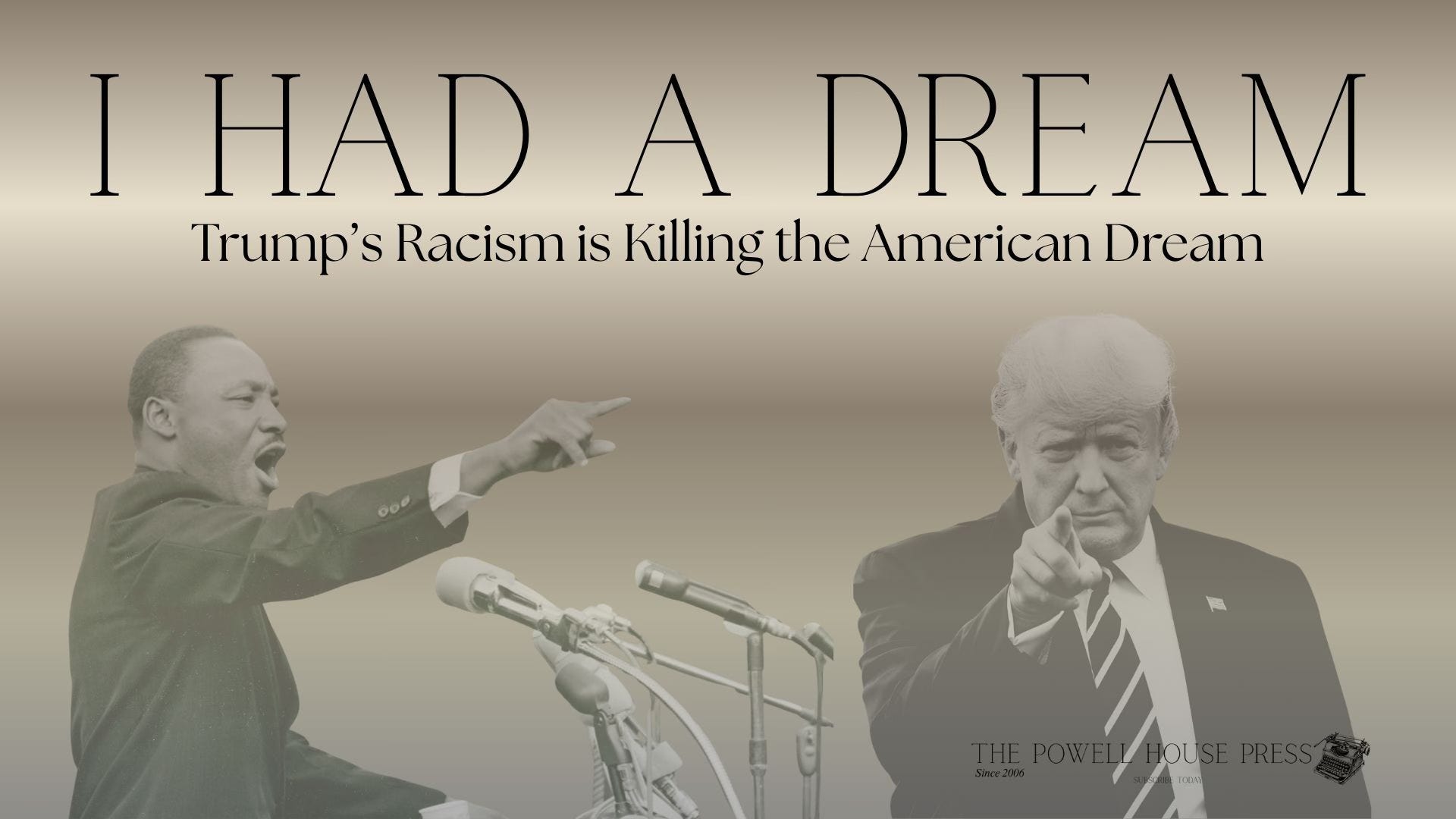
Note: While today should be about Martin Luther King Jr., I am writing in defense of his dream for a just society for all Americans. Trump and his administration are racists—either by their own personal beliefs or simply because they support a man who is and allow him to behave the way he does. And the evidence of this is clear when you look at Minnesota.
David Easterwood is a man with a considerable portfolio. As Acting Field Office Director for Immigration and Customs Enforcement in St. Paul, Minnesota, he commands federal agents across five Midwestern states—a territory the size of a small European country, dotted with meatpacking plants and dairy farms and Lutheran churches, all of it now crawling with men in tactical gear hunting human beings. On October 24, 2025, Easterwood stood at a press conference beside DHS Secretary Kristi Noem—the former South Dakota governor with the purchased hair and the frozen smile—and spoke proudly of his team’s “professionalism” and “integrity” in apprehending “criminal illegal aliens.” He was, by all accounts, having an excellent autumn.
David Easterwood is also a pastor at Cities Church in St. Paul, where he helps shepherd a flock of some several hundred souls in the Reformed Baptist tradition. On the church’s website, his face appears alongside seven other pastors, men with tidy beards and open-collared shirts, radiating the particular confidence of people who believe they have been chosen by God for important work. Mind you, this does not mean they studied theology. In the era of Trump, education is meaningless. And like many of the Christians that support Trump, they choose from the Bible that which advances their politics just as much as it does their faith. The commandments for example. The ten no-no’s. For example: thou shall not kill.
On January 7, 2026, an ICE agent named Jonathan Ross shot and killed Renee Good in south Minneapolis. Good was 37 years old, an American citizen, a mother, a wife. She had been observing federal operations from her car—legal activity, constitutionally protected—when Ross approached. He circled her vehicle. Another agent reached through the open window, ordering her out. Good put the car in motion, turning away from Ross, toward the flow of traffic. Ross fired three times: through the windshield, through the driver’s side window as the car passed. Good sustained gunshot wounds to her chest, her forearm, possibly her head. She was pronounced dead about an hour later. Her wife, Becca, said simply: “We had whistles. They had guns.”
Renee Good was a lesbian. She was married to a woman. And in the theology David Easterwood preaches on Sundays, that made her sinful and offensive to God—which is to say, in the moral calculus of his tradition, something less than fully human.
When you understand where Cities Church comes from—the theological roots, the denominational affiliation, the long entanglement of its tradition with the vilest currents in American history—Renee Good’s death begins to look less like a tragedy and more like an inevitability. The bullet, you might say, had been traveling for 180 years.
Cities Church was planted in 2015 as an offshoot of Bethlehem Baptist Church in Minneapolis, the mothership of celebrity Bible thumper John Piper’s empire. Piper, now 79, made his fortune peddling a doctrine he calls “Christian Hedonism,” the notion that God is most glorified when believers are most satisfied in Him. It sounds like something dreamed up at a Goop summit, but it launched a multimedia enterprise: Desiring God ministries, Bethlehem College, a network of church plants spreading the Piper gospel across the frozen tundra of the upper Midwest. Cities Church’s lead pastor, Jonathan Parnell, is a Bethlehem College graduate who sits on the seminary’s board of trustees. The family resemblance is unmistakable.
Both churches are affiliated with the Southern Baptist Convention, boasting some 47,000 congregations and 13 million members, an empire of Sunday schools and potluck suppers and parking lot revivals stretching from the Carolina Piedmont to the strip malls of Orange County. It is also a denomination founded, in 1845, for a single clarifying purpose: to defend the right of missionaries to own slaves.
The history is not subtle. Northern Baptists had refused to appoint slaveholders as missionaries, so southern congregations seceded and formed their own denomination—the ecclesiastical equivalent of Fort Sumter, sixteen years before the shooting started. The SBC’s flagship seminary, the Southern Baptist Theological Seminary in Louisville, was established in 1859 by four founders who were, as the seminary’s own 2018 report acknowledged, “deeply involved in slavery and deeply complicit in the defense of slavery.” These were not men troubled by cognitive dissonance. Seminary founder James P. Boyce delivered a speech at the South Carolina constitutional convention in 1865 arguing that “this is a white man’s government.” His colleague Basil Manly Jr. told northern Baptists in 1868, “We at the South do not recognize the social equality of the negro.” An Alabama Baptist newspaper crystallized the theology in 1901: “We are the Negro’s superior, made so by God.”
After the Civil War, the SBC planted its flag in support of the Lost Cause, that toxic mythology which reimagined the Confederacy as a noble crusade rather than a treasonous war to preserve human trafficking. Seminary faculty defended white rule and Black disenfranchisement based on explicit white supremacist ideology, arguing that white political control was essential to preserve “order” in the South. They opposed the election of Abraham Lincoln. They championed secession as “the only hope for preserving slavery.” The denomination did not merely tolerate racism; it theologized it, baptized it, wrapped it in Scripture and sent it forth into the world as the will of God.
And then there was the Klan. When the Ku Klux Klan was revived in 1915—launched with a cross burning atop Stone Mountain, Georgia, by a Methodist preacher named William Joseph Simmons—it presented itself explicitly as a Protestant Christian organization. The Klan’s own literature declared its mission was “to bring the different branches of the Protestant church into closer relationship” and “to preserve the United States as a Protestant Christian nation.” Membership required being “born in the United States, of white parentage” and “of the Protestant Christian faith.” The principles, the Klan helpfully explained, were “taken from the Twelfth chapter of Romans.”
Historian Kelly J. Baker, in her study Gospel According to the Klan, documents that Klan members were “primarily Baptists, Methodists, and members of the Disciples of Christ.” The organization’s newspaper ran advertisements for Baptist churches. Klansmen in full regalia showed up at revival meetings to donate money and letters of support to traveling evangelists, including the famous Billy Sunday, who stood dumbfounded as robed figures pressed cash into his hands. Baptist church cornerstones across America were dedicated by hooded Klansmen—a practice so commonplace that when one Louisiana pastor discovered a marble stone marked “KKK” in his old church garage decades later, longtime congregants shrugged and said, “It was commonplace in the ‘20s.” The Klan’s anthem was sung to the tune of “The Old Rugged Cross.” Its burning crosses symbolized, in its own telling, “sending out the light of Christ to the world.”
The marriage of white supremacy and Baptist Christianity was not incidental. It was the whole point.
The SBC formally apologized for its support of slavery in 1995—150 years late. In 2017, the convention adopted a resolution condemning white supremacy, but only after initial resistance drew approving tweets from white nationalist Richard Spencer. (”So apparently the Southern Baptists Convention didn’t denounce the Alt-Right after all,” Spencer crowed, before the convention hastily reversed course.) The denomination continues to reject Critical Race Theory as “incompatible” with Baptist doctrine—using, it must be noted, the same appeals to scriptural authority that once justified slavery. Plus ça change.
This is the tradition from which Cities Church descends. This is the water in which David Easterwood swims. And here is where the theology gets interesting—which is to say, here is where the hypocrisy becomes load-bearing.
Cities Church’s statement of faith declares the Bible to be “the supreme and final authority in testing all claims about what is true and what is right.” The document runs to three pages, dense with scripture citations, laying out the congregation’s positions on everything from the Trinity to the end times. But the section that fairly vibrates with enthusiasm is “Marriage and Sexuality.” Marriage, we learn, is “one man and one woman.” Sexual intimacy belongs “exclusively” within heterosexual marriage. And then: “Any form of sexual immorality, such as adultery, fornication, homosexuality, bisexual conduct, bestiality, incest, pornography, or any attempt to change or disagree with one’s biological sex is sinful and offensive to God.”
The scripture citations for this section draw heavily from Leviticus—that ancient Israelite holiness code that also forbids eating shellfish, wearing garments of mixed fabric, and getting tattoos. Churches like Cities Church have developed elaborate theological frameworks explaining why the sexual prohibitions remain eternally binding while the rules about shrimp cocktails and cotton-poly blends can be safely ignored. The gymnastics required are impressive: something about “moral” versus “ceremonial” laws, a distinction that appears nowhere in the biblical text itself but proves remarkably convenient for people who want to condemn homosexuality while enjoying a lobster dinner.
Here is what the statement of faith does not mention: the stranger. Not a word about the biblical passages commanding hospitality to foreigners. Nothing about how to treat immigrants, refugees, undocumented workers hiding in meatpacking plants while men with badges hunt them down.
And here is where the pattern reveals itself—the same pattern that has operated for 180 years. The statement of faith cites Leviticus extensively to condemn homosexuality. But Leviticus 19:34—three chapters later in the same book—commands: “The stranger who resides with you shall be to you as the native among you, and you shall love him as yourself.” That verse doesn’t make the cut. It’s the same theological sleight of hand their ancestors perfected: biblical authority is absolute when it targets the groups they want to exclude, conveniently flexible when it commands mercy toward those same groups.
In 1845, they cited scripture to defend slavery while ignoring the parts about liberation and justice. In 1915, they wrapped the Klan in Christianity while disregarding Jesus’s commands about love and neighbor. In 2025, they weaponize Leviticus against gay people while pretending the next chapter doesn’t exist. Different targets—Black people, gay people, immigrants—same method. Scripture becomes “supreme and final authority” only when it can be used to maintain traditional hierarchies and exclude the vulnerable. When it demands they extend mercy, dignity, or legal protection to those same groups, suddenly context matters, suddenly ancient laws don’t apply, suddenly we need sophisticated interpretation.
This is not biblical fidelity. This is theological cover for prejudice, sanctified bigotry with a worship band.
The New Testament makes the connection even more explicit. In Matthew 25, Jesus describes the final judgment—the moment when all nations will be sorted into saved and damned. The criteria are not theological propositions about sexuality. They are acts of mercy: feeding the hungry, clothing the naked, visiting the imprisoned, welcoming the stranger. “I was a stranger and you welcomed me,” Jesus says to the righteous. To the damned: “I was a stranger and you did not welcome me.”
Cities Church’s statement of faith contains extensive citations on who Christians may have sex with. It contains nothing on how they must treat the immigrant. Jesus made the stranger central to salvation itself. David Easterwood made hunting strangers his day job.
In court filings responding to an ACLU lawsuit brought by Minnesota residents arrested while observing ICE operations, David Easterwood defended his agents’ use of tear gas and flash-bang grenades against protesters. Though his boss, Kristie Noem has repeatedly claimed there has been no tear gas used despite Easterwood’s testimony and the video evidence. He defended the practice of swapping license plates to avoid identification. This is illegal. He testified he was “unaware” of agents targeting peaceful observers—this despite the fact that his agency had just killed one. A legal observer arrested by Easterwood’s agents reported being told: “You guys gotta stop obstructing us, that’s why that lesbian bitch is dead.”
That lesbian bitch. Renee Good. A child of God, in the theology these men claim to profess. A human being made in the image of the divine. Shot through her windshield on a Tuesday morning in Minneapolis.
When you belong to a church that teaches homosexuality is “sinful and offensive to God,” when you lead an agency conducting the most aggressive immigration crackdown in American history, when you descend from a tradition that blessed slavery and made common cause with the Klan—what do you see when you look at a lesbian legal observer standing between your agents and their targets? You see a sinner. You see an obstruction. You see someone the Bible has already told you is offensive to God, someone whose very existence violates divine order. The theology does the work for you. It has been doing that work for 180 years, marking certain people as less than human, as outside God’s protection, as obstacles to be removed.
The thread connecting slavery, the Klan, and ICE raids is not incidental. It is the same theological framework applied to different targets. The framework says: We determine who counts as fully human based on selective reading of scripture. We determine who deserves protection and who deserves violence. We wrap our prejudices in religious language and call it God’s will. Black people were the target, then they apologized. Gay people are the target now, with elaborate doctrinal statements. Immigrants are the target, with federal badges and tactical gear. The methodology is identical. The Bible becomes a weapon against the vulnerable while its commands to protect those same people are dismissed as ancient, contextual, or metaphorical.
Minneapolis Mayor Jacob Frey viewed the footage of Renee Good’s shooting. His assessment was succinct: “That is bullshit.” Governor Tim Walz proclaimed January 9 “Renee Good Day.” The Department of Justice opened investigations—not into the shooting, but into Walz and Frey for allegedly interfering with immigration enforcement. Six federal prosecutors in Minnesota resigned in protest. A six-month-old infant was hospitalized after being tear-gassed by federal agents during subsequent protests. The City Council president reported being assaulted by an ICE agent. President Trump threatened to invoke the Insurrection Act and deploy military forces. Active-duty soldiers from the 11th Airborne Division were placed on standby.
On the Sunday after the killing—Martin Luther King weekend, of all times—protesters from the Racial Justice Network and Black Lives Matter Minnesota entered Cities Church during worship. They chanted “ICE out!” and “Justice for Renee Good!” for 23 minutes while congregants sat in their pews and Pastor Jonathan Parnell stood at the pulpit. Nekima Levy Armstrong, an attorney, activist, and ordained minister, called Easterwood “a wolf in sheep’s clothing, masquerading as a pastor.”
Parnell’s response was telling. “Shame on you!” he shouted at the protesters. “This is a house of God!” Then he prayed aloud: “Dear Lord, please chasten us to get our house in order.”
Armstrong caught it immediately. “That was the perfect prayer for such a time as this,” she said afterward, “’cause that’s what we came to do. Get your house in order! Don’t pretend to be a church while harboring evil. Jesus went into the so-called houses of God, he flipped over tables. He said, this is not my father’s house, I don’t care what you pretend. So that’s what we did today. We flipped over a table for truth, justice, and righteousness.”
The Department of Justice is now investigating the protesters for potential violations of the FACE Act, which protects access to religious services. The shooting of Renee Good remains, as of this writing, without a federal criminal investigation.
The house has been out of order for 180 years. It was built that way—on a foundation of slavery, with Klansmen dedicating the cornerstones, and a theology that has always known exactly who counts as human and who does not. The Southern Baptist Convention apologized for slavery, but it never abandoned the interpretive frameworks that made slavery seem biblical in the first place. It condemned the Klan, but it never interrogated how the Klan could find such comfortable lodging in Baptist pews. It denounces racism, then rejects the analytical tools that would reveal racism’s ongoing operation. It writes elaborate doctrinal statements condemning homosexuality while ignoring equally clear biblical commands about immigrants. The pattern is consistent, the logic circular, the outcome foreordained.
David Easterwood will return to his pulpit. He will continue to direct federal agents who tear-gas infants and kill American citizens. He will continue to preach from a tradition that finds “supreme and final authority” in a Bible whose clearest commandments he professionally violates five days a week. The worship band will play. The sermons will be preached. The congregants will tithe.
Renee Good will still be dead.
She was not a stranger. She was an American, in her own city, on her own street. But she was a lesbian, and she stood in the way, and in the moral economy of David Easterwood’s faith—the same moral economy that once blessed slavery and marched with the Klan—that was enough. The Bible said she was sinful. The Bible was silent about immigrants. And when scripture is silent on those you want to harm, silence becomes permission.
Jesus said nations would be judged by how they treated the stranger. “I was a stranger and you did not welcome me,” he warned. The response from Summit Avenue, as of press time, is silence.
©2026 All Rights Reserved. Josh Powell/The Powell House Press
josh@thepowellhousepress.com