

Too Old To Lead
Too Old To Lead


This is not a partisan piece. Trump appears in it, but that’s a function of age and behavior, and the second follows from the first. Biden appears in it too. So does a Republican senator from Kentucky, a Democrat from California who died in office, a retired Supreme Court justice who spent her last years publicly disintegrating, and a sitting federal appeals judge who is currently suing her own colleagues to keep hearing patent cases at 96. The pattern doesn’t sort by party registration. It sorts by the number of years since someone graduated college.
We are living in a gerontocracy, and it is not simply a cultural complaint about out-of-touch elders. It is a physiological one, and the two compound each other in ways that rarely get discussed in the same paragraph. An electorate fed a diet of social media and opinion dressed up as news, poorly schooled in civics, history, and what the press is even supposed to do, has lost some of its capacity to notice when a leader has stayed past the point their judgment can be trusted. Not every elderly official is frozen in 1974. Some aren’t. Some are, and the ones who are tend to be the ones dismissing climate change, opposing protections for gay and trans people, and treating racism against Black and brown Americans as a finished, historical problem rather than a live one. That’s a real and separate danger, and it deserves its own reckoning. But underneath the ideology sits a plainer, less partisan mechanism: what age does to a brain, and what a system with no exit ramp does when it lets that brain keep making decisions for the rest of us.
Start with what the decline actually is, mechanically. The brain doesn’t lose neurons by the truckload after 30, which was the old and largely wrong assumption. Neurons mostly survive. What thins is the wiring between them, the synapses, the white matter, the density of the network, and synaptic loss rather than cell death is now understood as the primary driver of normal age-related brain shrinkage. The practical order of operations: processing speed goes first, then working memory, then the ability to multitask the way a person used to. None of that is dementia. It’s depreciation, the same as any organ. Something like 40 percent of people 65 and older report some memory trouble. Most of that is losing the car keys, not losing the thread of a national security briefing.
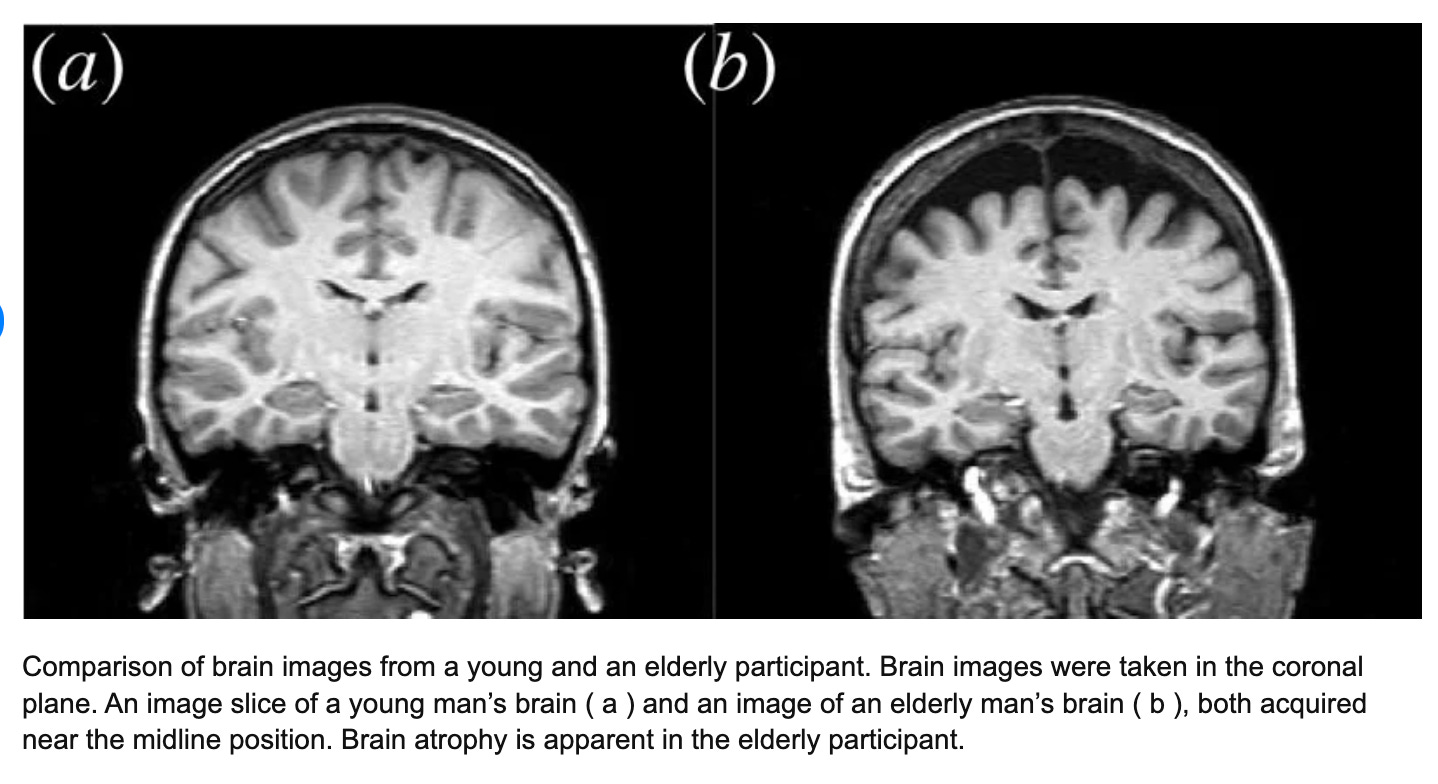
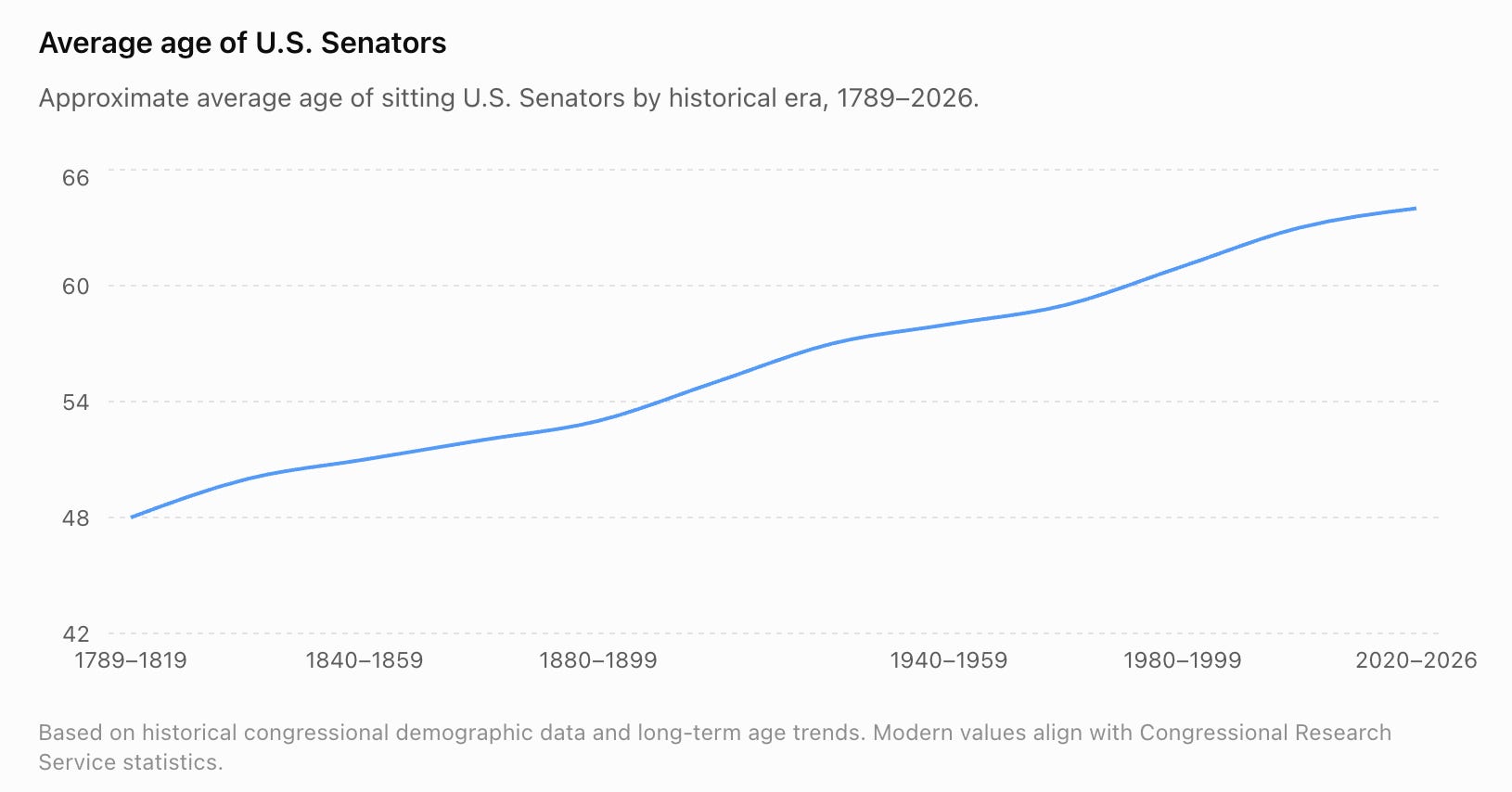
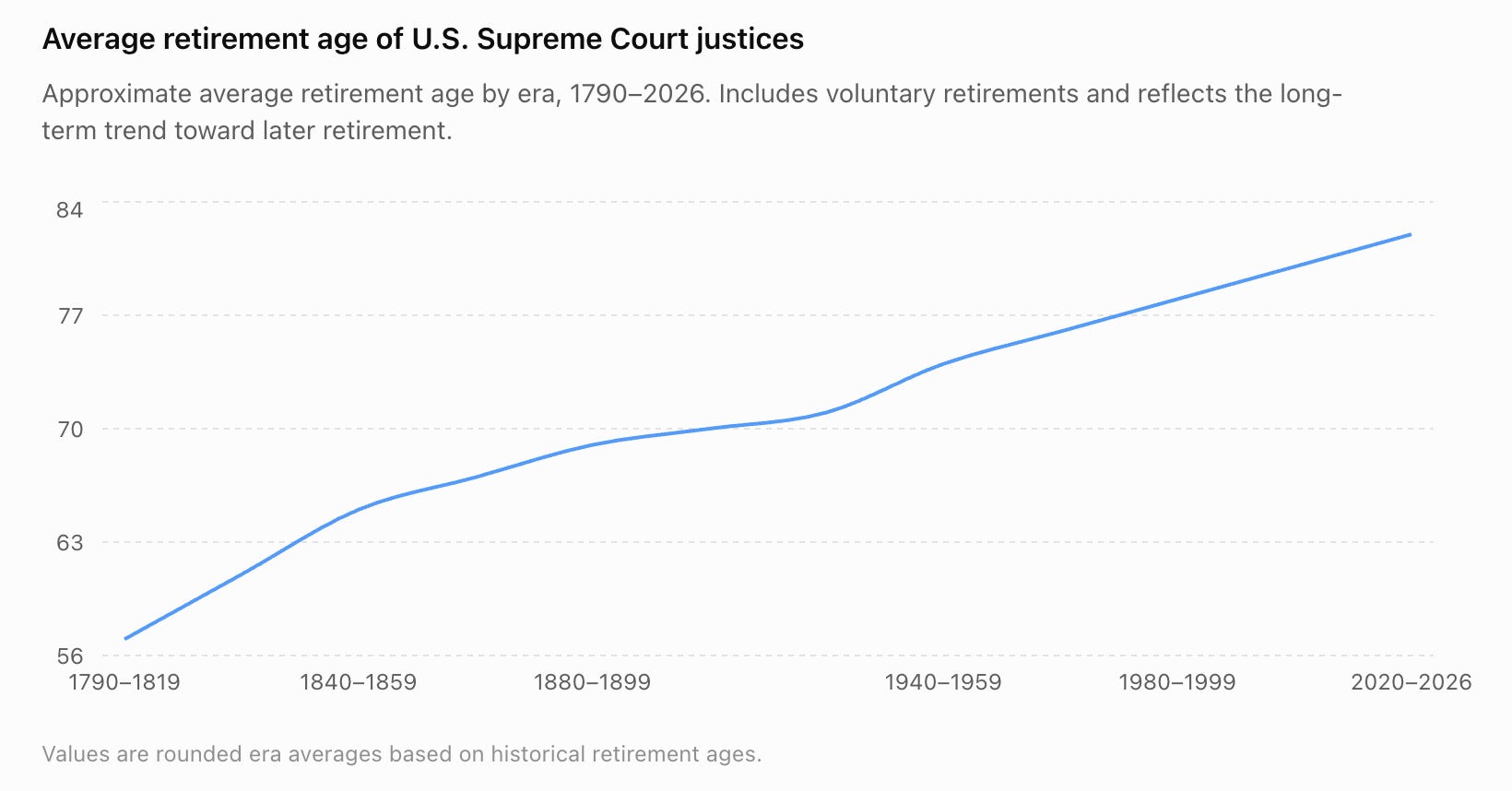
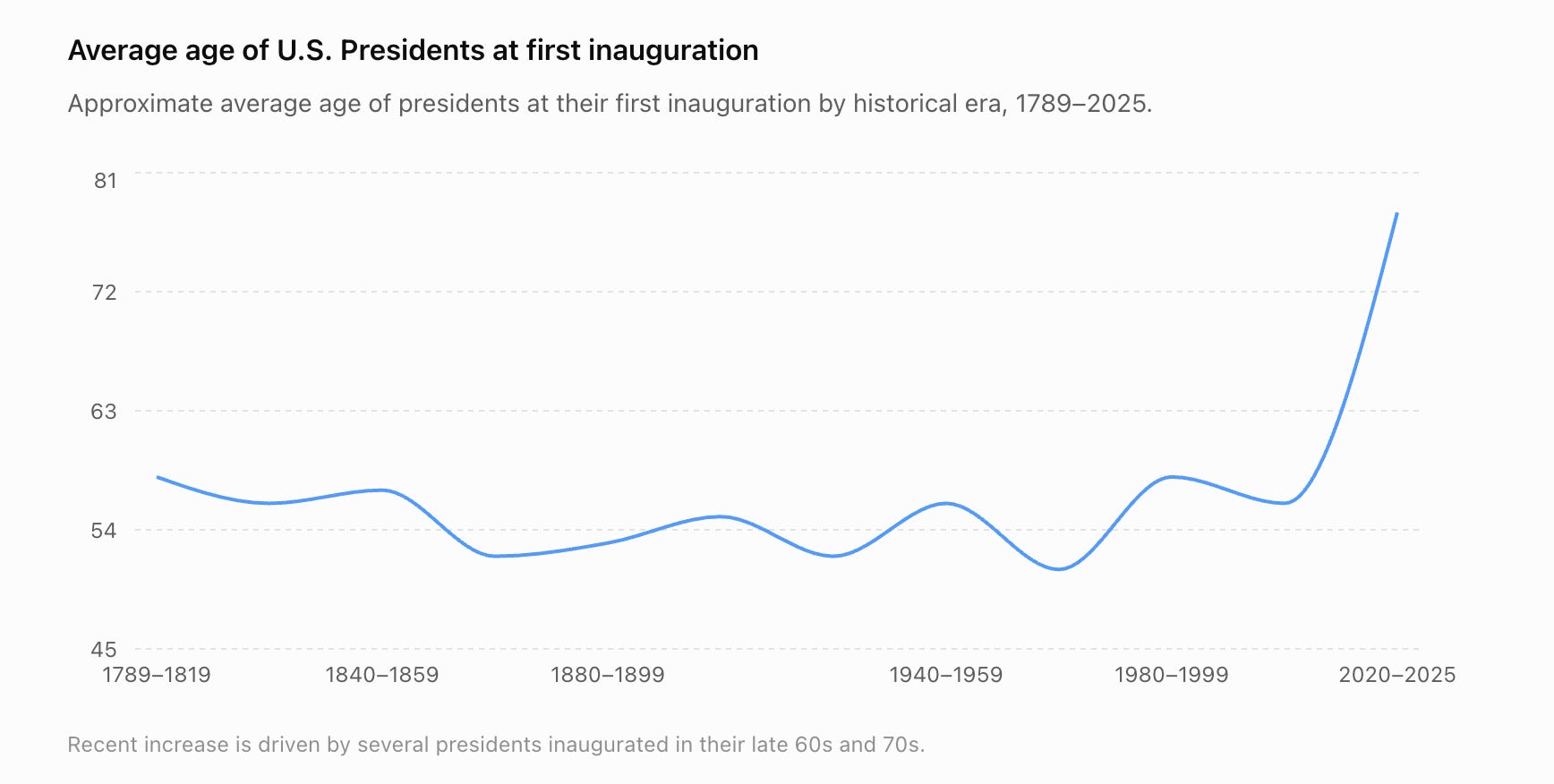
The persistent and mildly annoying assumption is that brain aging is exclusively an old person’s problem. It isn’t. It’s a problem decided in midlife and collected on in old age, on a schedule that doesn’t care about term limits or committee assignments. The Lancet Commission’s list of modifiable dementia risk factors, twelve items now, including hypertension, obesity, diabetes, smoking, physical inactivity, low social contact, and hearing loss, does its damage decades before symptoms surface. Hypertension in a senator’s 40s doesn’t wait politely until his 70s to start compounding. Where the curve actually steepens is mid-60s onward, and it steepens hard: Alzheimer’s incidence roughly doubles every five years past 65, and population studies out of Latin American cohorts found cognitive impairment rates around 18 to 21 percent at 65, climbing to 54 to 60 percent by 85. That is not a gentle slope. That is a cliff with a short runway, and it happens to be the exact age range in which the United States currently staffs its Senate leadership, three of its nine Supreme Court seats at various points in the last decade, and, twice in a row now, its presidency.
There’s a counterintuitive wrinkle worth sitting with, because it complicates the tidy story rather than simplifying it. Longitudinal research out of Amsterdam found that several classic risk factors, high cholesterol, high homocysteine, hypertension, smoking, depression, correlate with less additional decline in the oldest-old, the 80-plus group, compared with the 55-to-80 group. The likely explanation is survivorship: the people who make it to 85 carrying those risk factors were already unusually resilient to them, which is a different claim than “aging is fine, actually.” It means the particular 85-year-old standing in front of the cameras has already won a biological lottery just by being there, which tells you nothing about whether he can still do the job, only that his heart and arteries have held up better than the average person’s. The brain and the cardiovascular system don’t depreciate at the same rate, and a strong pulse is not evidence of a strong prefrontal cortex.
Layer onto that the two accelerants that hit a person in high office harder than almost anyone else: chronic stress and fractured sleep. Stress isn’t a feeling, it’s a hormone cascade, and the hormone in question, cortisol, has a favorite target, the hippocampus, the part of the brain that runs memory and learning. The mechanism traces to Robert Sapolsky’s foundational work and has been confirmed repeatedly since. Chronic, elevated cortisol is associated with measurable hippocampal atrophy and memory deficits in aging humans, not just lab rats, and a landmark study tracking cortisol in older adults over five years found sustained elevation correlated with smaller hippocampal volumes and worse memory. The hippocampus is unusually dense with the receptors that respond to stress hormones, which also gives it the job of shutting the stress response back off once the threat passes. Chronic stress degrades the brake pedal along with the rest of the machine: it suppresses new neuron growth in one of the few regions of the adult brain that still generates them, shrinks the branching structure of hippocampal neurons, and makes the amygdala, the fear center, more reactive at the same time, so a person ends up more anxious and less equipped to reason his way out of it. None of that requires a diagnosable disorder. Ordinary chronic stress does the damage, and there is no job in American life that manufactures more sustained, undiluted chronic stress than the presidency, Senate leadership, or a seat on the Supreme Court during a term when the country is genuinely on fire. The brain does not distinguish between a tiger and a war brief delivered at midnight.
Sleep is the other accelerant, and it’s the quieter one. If stress is a slow bleed, fractured sleep is a maintenance crew that stopped showing up. The brain clears its own metabolic waste through the glymphatic system, discovered only in 2012, which runs almost exclusively during deep, slow-wave sleep, flushing out amyloid-beta and tau, the two proteins most associated with Alzheimer’s pathology. Fragmented sleep, meaning sleep interrupted repeatedly rather than simply short, robs the brain of the sustained stretches that process requires, even when a tracker says eight hours logged. A single night of sleep deprivation raises amyloid-beta concentration in the hippocampus and thalamus of healthy young adults, and population studies show poor sleep quality tracking with higher amyloid and tau burden years before any clinical decline becomes visible. For a head of state or a Senate leader who has run on four or five hours a night for decades, often as a matter of public pride, that’s not a charming personality quirk. That’s decades of skipped overnight maintenance.
None of this requires malice or even negligence from the people it happens to. It requires only time, stress, bad sleep, and an institution with no mechanism for saying, gently or otherwise, that the time has come to leave the dance. And American institutions, across all three branches, have built almost nothing in the way of such a mechanism. Congress and the presidency require no cognitive exam, no mandatory physical beyond what a president or nominee volunteers to release, and no retirement age. No employer of consequence would hire an executive at 80 without a physical, and almost none would keep one past 85 without ongoing evaluation, yet the federal government does neither, and incumbency, seniority, and safe districts mean the people least likely to be forced out are frequently the people who have been there longest, which correlates, unhelpfully, with the people getting oldest.
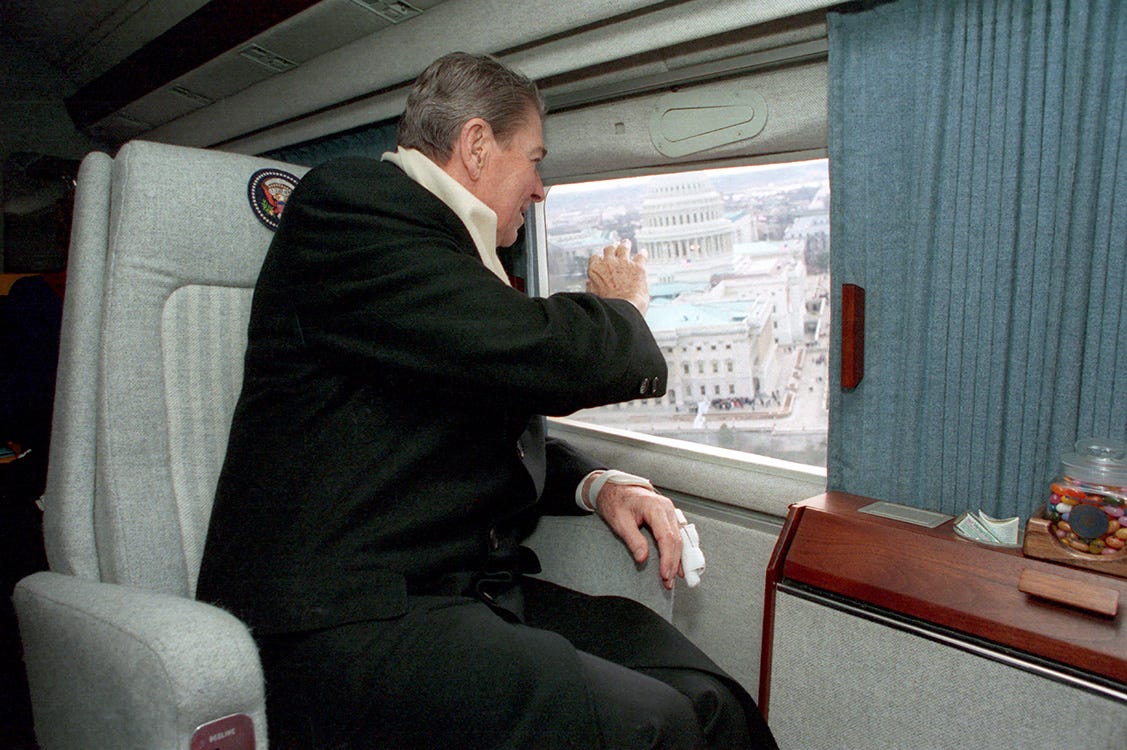
Ronald Reagan is the case that predates all of the others here and complicates the tidy modern version of this story, because the alarm in his case was raised only in hindsight, years after anyone could do anything with it. Reagan left office in January 1989 and announced, in a handwritten letter to the American public, that he had been diagnosed with Alzheimer’s disease in November 1994, nearly six years later, describing it as the beginning of “the journey that will lead me into the sunset of my life.” Researchers at Arizona State University later went back and analyzed transcripts of his unscripted press conferences against those of his similarly aged successor, George H.W. Bush, tracking linguistic markers already associated with early dementia: a rising reliance on filler words and nonspecific nouns like “thing” in place of actual nouns, and a shrinking vocabulary of unique words used over time. Reagan’s numbers moved steadily in that direction across both terms, worsening toward the end of his presidency. Bush’s, tracked the identical way, did not move at all. The researchers were careful to say the finding doesn’t prove Reagan’s judgment was compromised while he still held the office, and that a public figure simplifying his language for effect would produce a similar signature on paper. But it is the closest thing that exists to physical evidence that a disease officially dated to a single letter in 1994 did not begin on the date of that letter, and that the country was governed, in some undetermined and undiagnosed capacity, by the earliest stages of Alzheimer’s for a meaningful stretch of two full terms without anyone, including the people writing his schedule, knowing it.
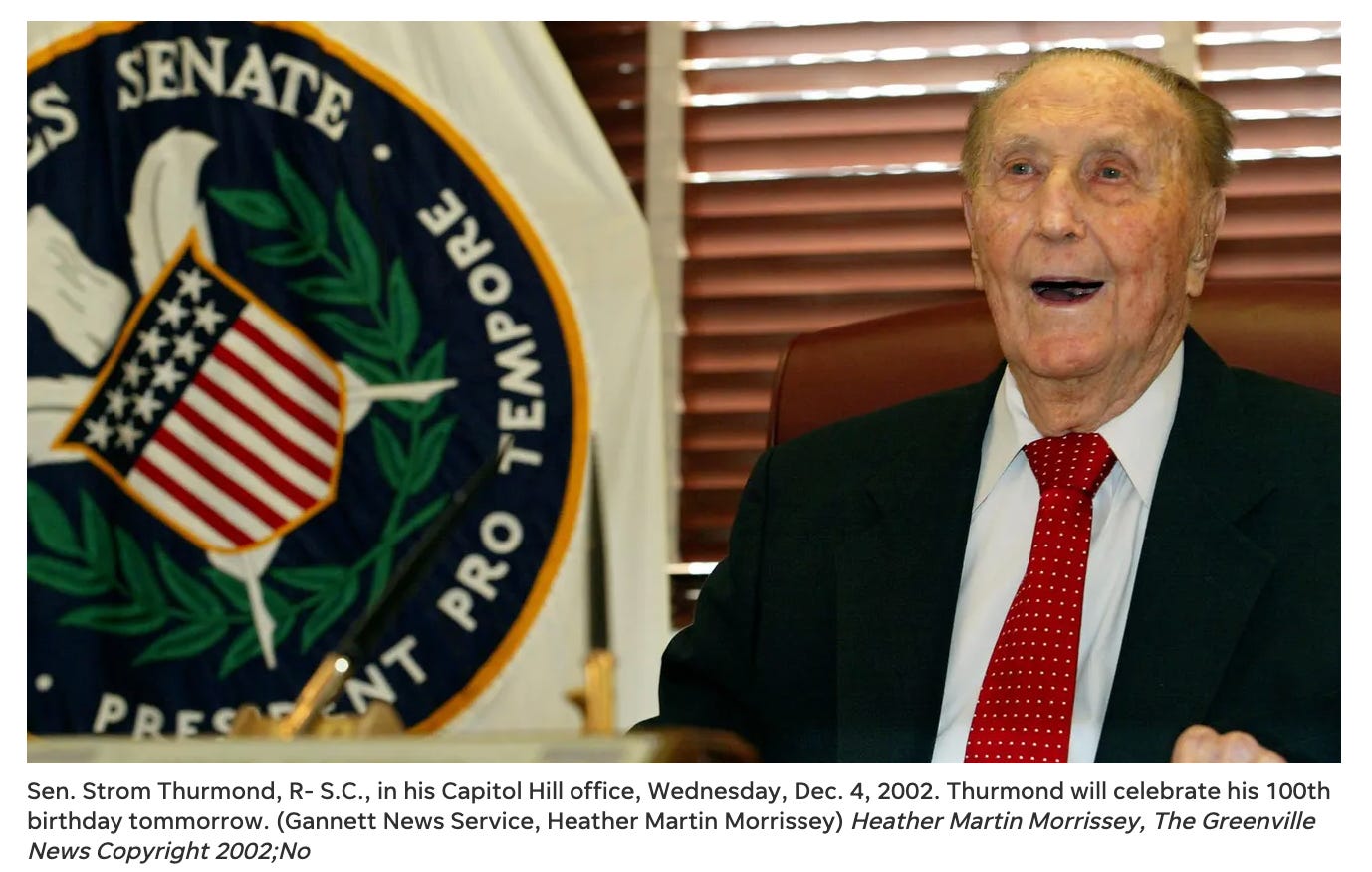
Strom Thurmond set the modern template for what unchecked decline looks like when it’s allowed to run its full course in the open. The South Carolina senator turned 100 in office in December 2002, the only member of Congress ever to do so, and retired a month later. He’d collapsed on the Senate floor the year before and spent his final months sleeping at Walter Reed, wheeled into the chamber by aides for his last votes, his once-formidable filibustering voice reduced to something rarely heard from the floor at all. He died six months after leaving office. Colleagues and the press treated his final years less as a warning than as a curiosity of longevity, a folksy record for the history books, and that framing made the next several cases easier to wave off when they arrived.
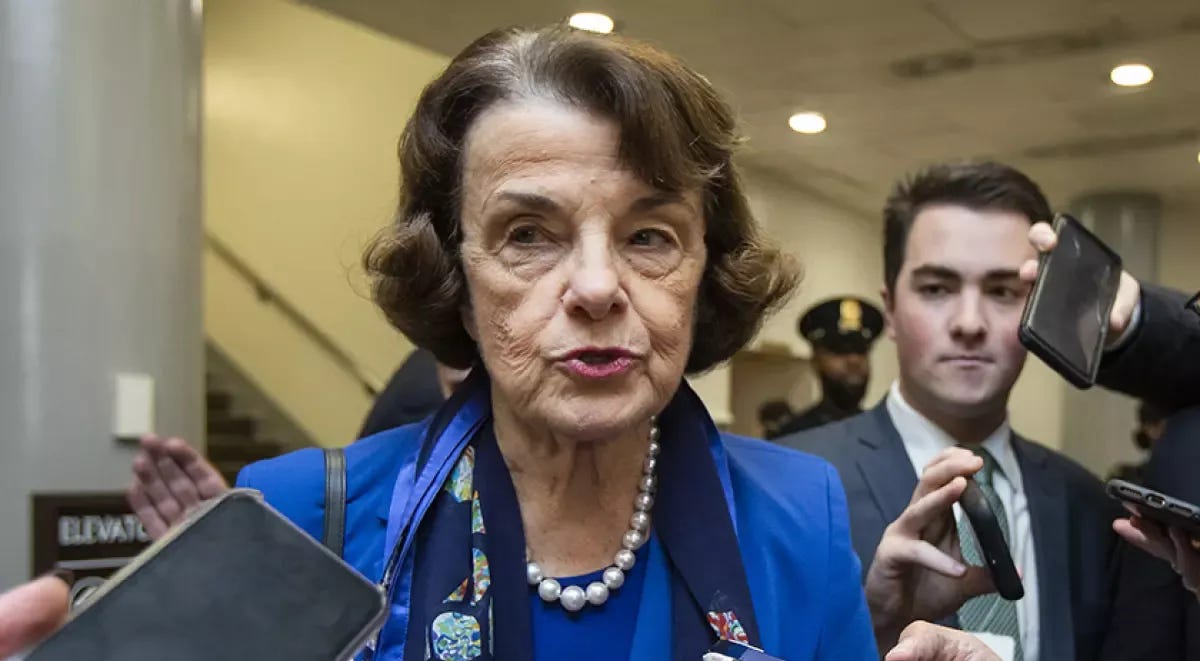
Dianne Feinstein followed a slower, better-documented arc, one that played out in real time across years of reporting rather than resolving in a single dramatic freeze. Reports of memory lapses surfaced as early as 2020, and by 2022 The New Yorker and The New York Times were citing unnamed Senate colleagues and staff describing her forgetting phone calls, meetings, and colleagues’ names. Some defended her publicly, including Nancy Pelosi, while others, speaking only on background, called her decline an open secret on the Hill that anyone denying was simply lying. The New York Times later wrote that she was, by all accounts, clearly in the later stages of dementia during her final years in the chamber. She died in office in September 2023, four months shy of her ninetieth birthday, having never resigned, her seat vacant only because her body finally settled the question her judgment no longer could.
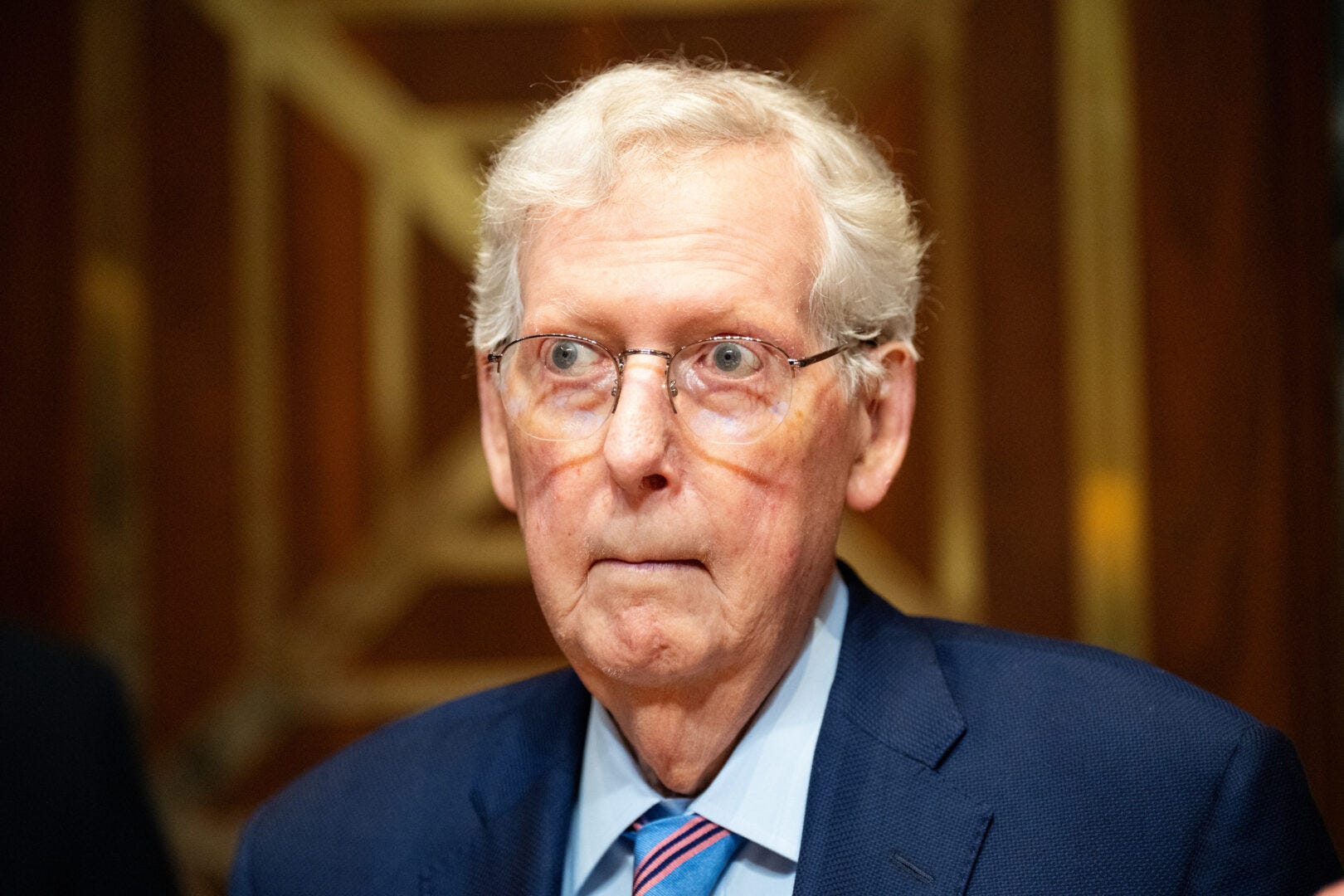
Mitch McConnell, 84, froze mid-sentence at two separate press conferences in the summer of 2023, standing silent at the podium for roughly 20 to 30 seconds each time before an aide stepped in. He had already suffered a concussion and fractured ribs from a fall earlier that year, plus a separate fall exiting a plane, and his office released a note from the Capitol physician clearing him of stroke, seizure, or Parkinson’s, though it declined to say what had caused the freezes. He stepped down as Senate Republican leader after the 2024 election but kept his seat. Recently, he was hospitalized after emergency dispatch audio, later obtained by NBC News, described paramedics performing CPR at his home following a reported cardiac arrest. His office will not confirm the cause of the hospitalization and, even as recently as Friday, has said only that he “continues to improve.” He has not been seen publicly since, and by early July his own Kentucky challenger was publicly asking whether the Senate should simply be told the truth.
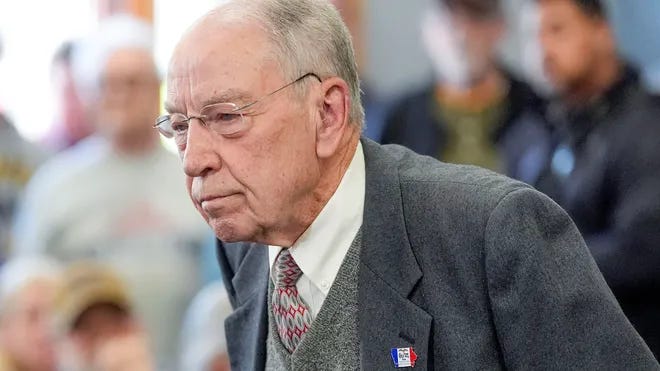
Chuck Grassley, 92, is the Senate’s oldest sitting member and, as president pro tempore, is third in the line of presidential succession behind the vice president. His office describes him as fully engaged, and unlike Feinstein, he hasn’t had a public episode widely read as cognitive decline. He’s had one that raised the question anyway: at an October 2025 press conference on the Judiciary Committee’s 2020-election investigation, Grassley visibly struggled to answer a question, tugging at his ear and mumbling to colleagues before Lindsey Graham stepped in to field it for him. His office attributed it to hearing problems. He has said he’ll decide about a 2028 run “in a couple of years,” which would put him on a ballot at 95, seeking a term that would end at 99.
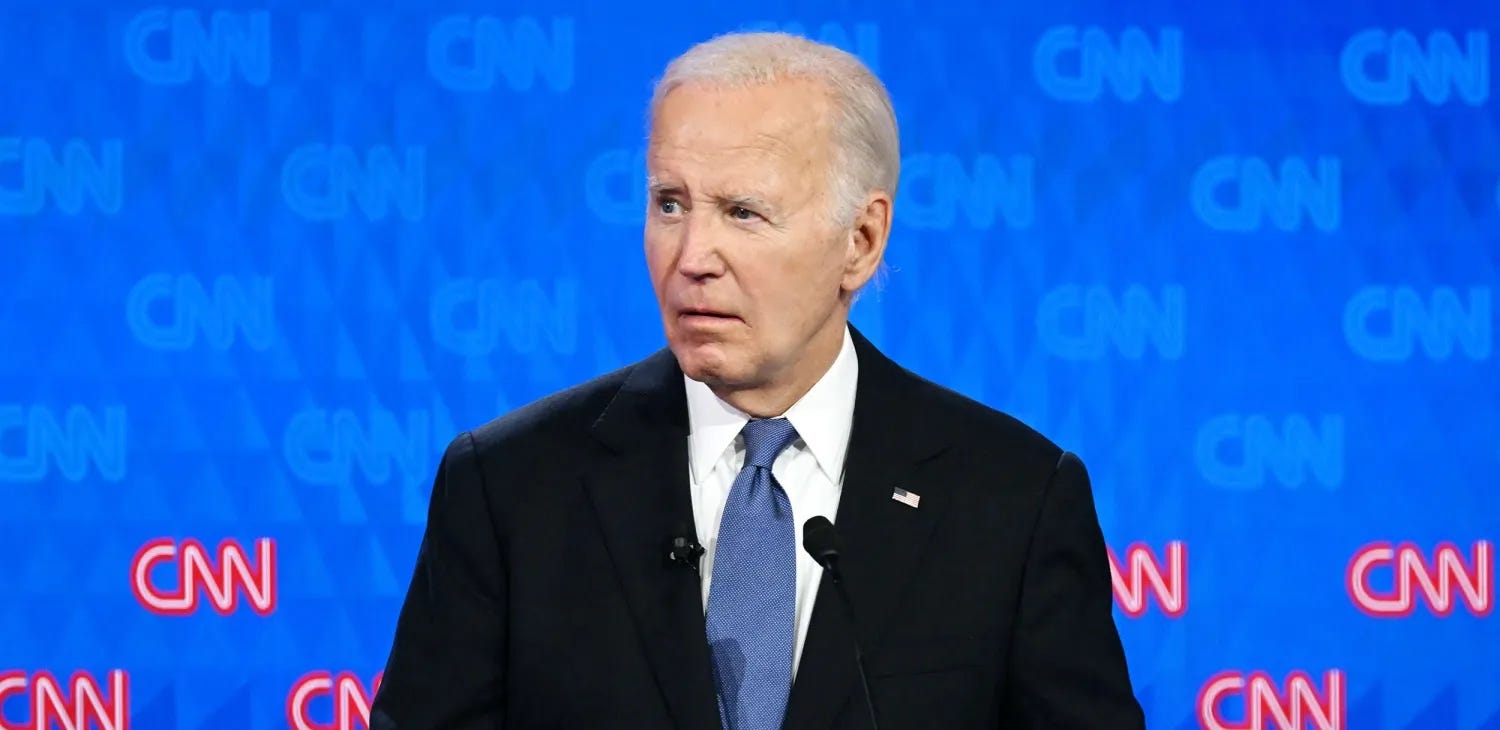
Joe Biden left office as the oldest president in American history, and the manner of his exit is now the clearest case study available of how institutional incentives can outrun a hard biological ceiling. Special counsel Robert Hur’s February 2024 report described him as a “well-meaning, elderly man with a poor memory,” a characterization the White House dismissed as a partisan hit job. Five months later, a faltering, meandering debate performance against Trump, marked by a hoarse voice and lost trains of thought, ended the deniability in a single evening. More than thirty congressional Democrats publicly called for him to withdraw within three weeks. He did, on July 21, 2024. Reporting since, including a Wall Street Journal account of how the White House functioned around a diminished president and a House Oversight Committee report released in October 2025, has described a West Wing that managed his decline rather than disclosed it. Biden was diagnosed with metastatic prostate cancer in May 2025. In May 2026, Jill Biden said publicly, for the first time, that she believed her husband had been having a stroke during the debate itself, a detail that arrived nearly two years after the event it describes.

Donald Trump turned 80 in June 2026, becoming the second president after Biden to reach that age in office, and the concerns tracking him now mirror the ones that tracked his predecessor almost exactly. He’s been recorded apparently asleep during cabinet meetings, a Memorial Day ceremony, and courtside at an NBA Finals game, earning the label “Sleepy Don,” an echo of his own earlier “Sleepy Joe.” He’s confused Greenland and Iceland multiple times in a single Davos speech, misattributed the 2021 Kabul airport deaths to the wrong president in eight separate instances, and told reporters he was flying to Russia to meet Putin days before correcting himself that the summit was actually in Alaska. His hands have shown persistent, unexplained bruising that White House physicians attribute to high-dose aspirin use; he told the Wall Street Journal he takes roughly 325 milligrams daily, more than four times the standard preventive dose. He briefly told reporters he’d had an MRI, then walked it back to a CT scan, a downgrade in both procedure and plausibility. At the NATO summit in Ankara in July 2026, sitting beside Ukrainian president Volodymyr Zelensky, Trump gestured at him and asked reporters if they had a question for “President Putin,” then attempted to recover by claiming he’d meant to relay any questions to the actual Putin later that day. In the same set of remarks he referred to Iran, mid-sentence, as the “Islamic Republic of Japan” while describing a missile attack on a U.S. aircraft carrier. Both mix-ups are close to identical, down to the specific wording, to an error Biden made at a NATO summit two years earlier, when he introduced Zelensky to the assembled press as “President Putin” before catching himself, which does less to distinguish either man’s decline than it does to suggest what happens to any 80-year-old brain, regardless of party, under that particular kind of sustained public pressure and jet lag. A February 2026 Reuters-Ipsos poll found a majority of Americans, including 30 percent of Republicans, think he’s grown more erratic with age. An aging researcher at Oregon State told reporters his language degradation and 4 a.m. social-media posting are consistent with, though not diagnostic of, abnormal cognitive aging. The White House calls him the sharpest president in history and says his energy is unmatched. Both sentences can be quoted accurately, and both are worth remembering the next time either party insists that only the other party’s octogenarians are the problem.
The elected branches at least have elections, however imperfect a check that turns out to be against an incumbent whose decline is actively being concealed by his own staff. The judiciary has nothing of the kind, and it is the branch where the arithmetic of aging power gets genuinely frightening, because federal judges and Supreme Court justices serve for life, by constitutional design, with no mandatory retirement age at all. The framers wrote life tenure into Article III specifically to insulate judges from political pressure, a reasonable goal in 1789, when American life expectancy hovered around 38 and the idea of a jurist serving three or four active decades on the bench was not really on the table. It is very much on the table now. The share of octogenarians and nonagenarians on the federal bench has roughly doubled in the past twenty years. Judge Wesley E. Brown of Kansas, appointed by Kennedy, served until he died on the bench at 104. Judge Jack Weinstein, a fixture of the Eastern District of New York, didn’t retire until 2020, at 98. The average age of a sitting federal judge is now older than at any point in the nation’s history.
The mechanism the judiciary actually relies on to manage this is not a mechanism at all. It’s an informal, almost familial system of colleagues quietly intervening, sometimes described by the judges themselves in the language of elder care rather than institutional policy. One federal appeals judge compared the process to persuading an aging parent to stop driving: how do you get grandma off the highway. Frank Easterbrook, chief judge of the Seventh Circuit, has publicly invited lawyers to contact his chambers directly if they believe a colleague is showing signs of dementia, a workaround so far outside normal institutional process that it made news simply for existing. There is no requirement that federal judges undergo a checkup, consult a geriatrician, or submit to any cognitive screening at any age. When concerns do surface, the response is almost always the same: a quiet word, a gentle nudge toward “senior status,” which lets a judge keep the title, the salary, and often a reduced docket without formally retiring, and which has produced a shadow judiciary of roughly five hundred senior judges still handling cases, invisible to the public unless something goes wrong.
Something has gone wrong often enough to have a paper trail. Judge Pauline Newman of the Federal Circuit, appointed by Reagan in 1984 and the first jurist named directly to that court, is currently 96 and has been suspended from hearing new cases since 2023 after her own colleagues opened a disability investigation, alleging she showed signs of paranoia, agitation, and trouble retaining basic information in conversation. Newman has refused to undergo a neurological exam or turn over her medical records, has sued her own court to block the investigation, and maintains she remains fit to serve, a claim she is constitutionally entitled to keep making for as long as she draws breath, because nothing in the federal system can force the question to a conclusion the way an election, however belatedly, forced Biden’s. A Brooklyn state judge, dealing cases from the bench for years before anyone connected her worsening behavior to what turned out to be Alzheimer’s, is the starker version of the same failure one level down, in a court system that at least has more tools available than the federal bench does, and still didn’t catch it in time to spare the people whose cases she was deciding.
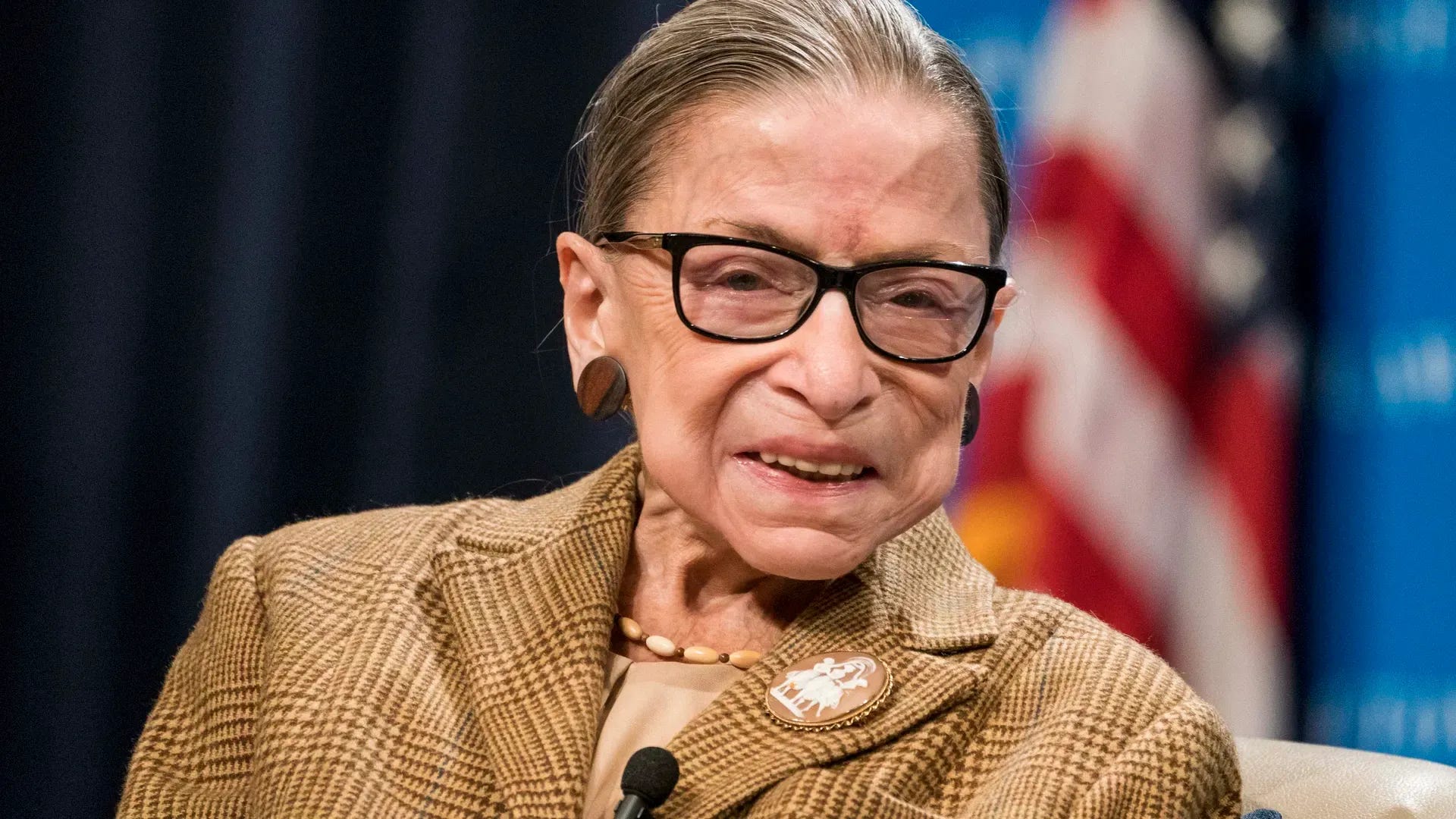
The Supreme Court sits atop this same structure with even higher stakes attached to every seat. Ruth Bader Ginsburg turned down repeated, public pleas from legal scholars to retire in 2013 or 2014, while a Democratic president and Senate could still confirm her successor, choosing instead to stay “as long as I can do the job full steam.” She was diagnosed with pancreatic cancer that year and fought it, along with colon and lung cancer, for the better part of two decades on the bench, dying in September 2020 at 87, seven weeks before a presidential election. Her seat was filled 39 days later, producing one of the more consequential rightward shifts on the Court in the last century, arguably the direct hinge on which Dobbs and the fall of Roe turned. Whatever else is true about Ginsburg’s judgment as a jurist, her judgment about her own mortality and its political consequences was catastrophically wrong, and the country is still living inside that miscalculation. Justice William O. Douglas offers the starker precedent from an earlier generation: he refused to step down in 1975 despite open concern among his colleagues about his fitness, following a stroke that had left him partially paralyzed and, by some accounts, confused on the bench, and had to be effectively eased out by the other justices managing his caseload around him.
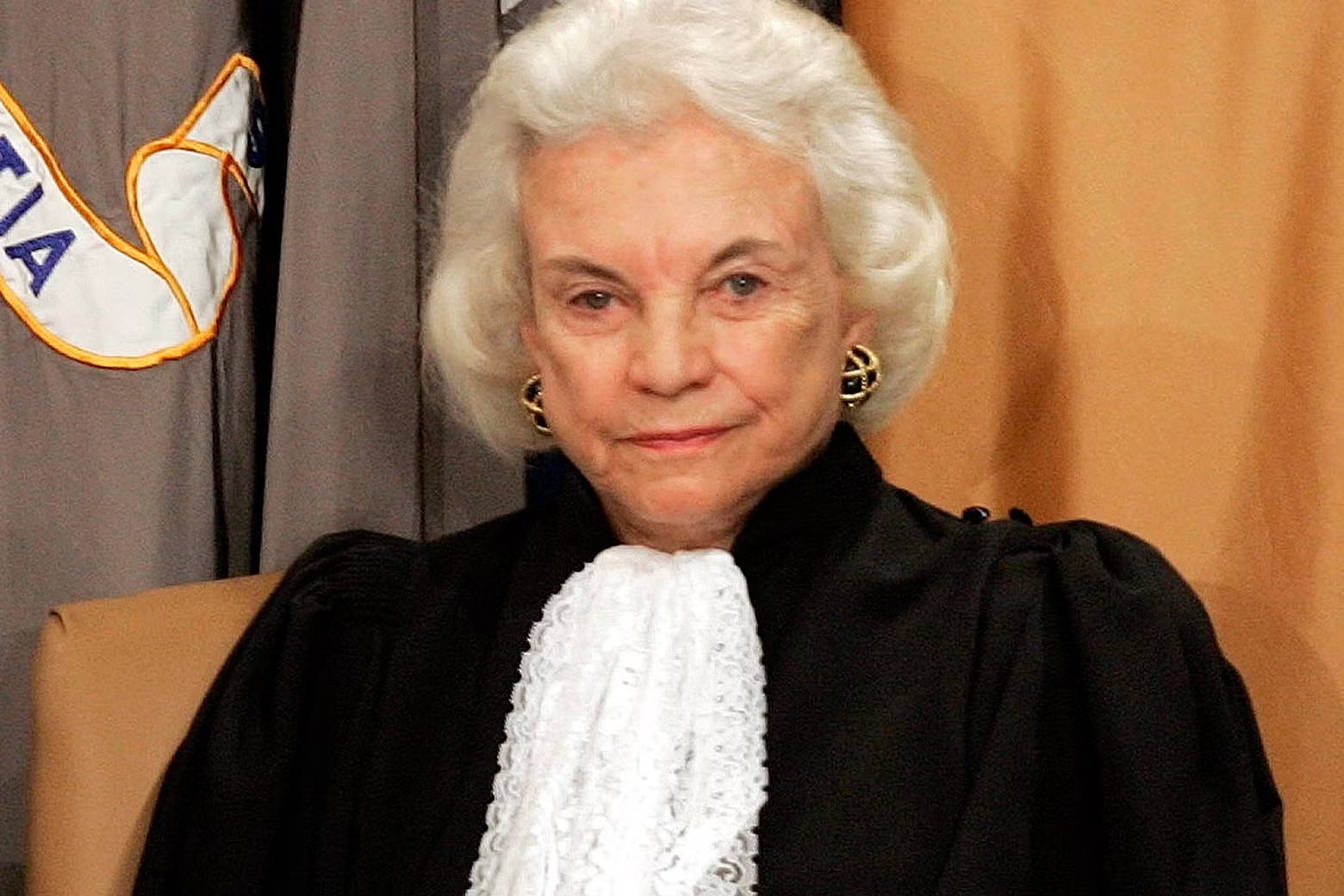
Sandra Day O’Connor is the instructive counterexample, and worth sitting with precisely because she got the timing right. She retired from the Court in 2006, cognitively intact by every account, specifically to care for her husband John as his own Alzheimer’s progressed. Twelve years later, in October 2018, at 88, she announced in a public letter that she too had been diagnosed with the beginning stages of dementia, probably Alzheimer’s. The disease waited for her, in other words, until safely after she’d left the bench, and the country only knows that because she left when she did rather than when the diagnosis eventually arrived. Had she followed Ginsburg’s logic instead of her own, there is no reason to think the outcome would have been any different in kind, only in when the public found out, and in how many opinions she might have authored or joined in the interim without anyone outside her chambers knowing.
The current Court carries the same actuarial exposure forward with less public discussion than either Congress or the presidency, in part because justices don’t hold press conferences and don’t have to answer questions after freezing at a podium. Clarence Thomas, appointed in 1991, is now the Court’s longest-serving and oldest member. Samuel Alito is close behind him in both tenure and age. Neither has shown any public sign of the kind of decline that dogged Ginsburg, and there is no reason at present to suggest otherwise. That is precisely the point of raising it now rather than after the fact: the entire history above, Reagan, Thurmond, Feinstein, Ginsburg, O’Connor, Newman, Douglas, is a history of the public and the press finding out only once the decline had already compromised the job, because nothing in the system requires an earlier accounting. A justice, like a district judge, can decide constitutional questions affecting three hundred million people for as long as he draws breath and chooses to stay, and the only people positioned to notice if something is wrong are the four or five colleagues sharing a marble hallway with him, few of whom have any professional or personal incentive to say so out loud.
State courts, whatever their other flaws, got this one basic structural question right in a way the federal system and Congress did not. The overwhelming majority of states impose a mandatory retirement age on their judges, typically 70, sometimes as high as 75, and several, including New York, allow court administrators to compel a sitting judge to submit to a medical exam if colleagues raise sufficient concern. It is not a perfect system. It doesn’t anticipate a judge developing early-onset dementia at 55, and enforcement still depends heavily on colleagues being willing to say something. But it is a system, with a floor and a mechanism, which is more than the federal bench, the Supreme Court, the Senate, or the presidency currently has. A proposal to import an equivalent, a fixed retirement age or 15-year term limits for federal judges, championed intermittently by scholars and even floated in a milder form by Chief Justice Roberts himself, has never come close to becoming law, in part because the same seniority-protecting political logic that keeps 90-year-old senators on primary ballots also protects the judges appointed by yesterday’s presidents from being displaced by tomorrow’s.
None of this is a verdict on any one of these people’s record or character. It’s what the biology predicts, and the biology does not check party registration or judicial philosophy on its way in. Cortisol doesn’t know whether the stress came from a caucus vote, a war brief, or a bench memo on a death-penalty appeal. The glymphatic system doesn’t care whether the missed sleep came from a 4 a.m. Truth Social binge or a 2 a.m. call about troop movements or a docket of three hundred unresolved motions. Synaptic density doesn’t negotiate, and it doesn’t wait for reelection, confirmation, or retirement announcements to make its case. The institutions built to run the country, and the ones built to judge it, were not constructed with an exit ramp for the people who age out of doing either job well, and the country has, so far, mostly declined to build one, out of some combination of seniority protection, party self-interest, and a lingering cultural squeamishness about telling anyone, let alone someone powerful, that it might be time to go. Midlife is when the bill gets written. In the Senate, the Oval Office, and on the federal bench, increasingly, late life is where the country finds out what that bill actually cost, and by the time it does, the person best positioned to have caught it early is usually the last one willing to say so.

Overall I agree with you, but many of the things you mention regarding aging can be managed or reversed if you know what to do. I am a 78-year-old family physician raising a 12-year-old daughter. I have a girlfriend half my age, and I have introducced a new diseae model that readily explains our current epidemics of obesity, metabolic syndrome, and common brain disorders: https://carbsyndrome.com
My dear mother and her mother had advance Alzheimer's disease at my age, but I can't afford to go there, so I follow my own crazy advice by preventing CARB syndrome and taking care of my brain health. So far, so good, and please don't count me out because of my age!